Acupuncture
We use acupuncture and ear acupuncture as a complement – for pain, hormonal and cycle disorders, exhaustion or fertility.

Naturopathy · Pain therapy
Your pain taken seriously. Supported holistically.
Do you live with recurring pain, for example in your back, your head or during your period? At our practice in Munich, we first clarify the cause. Then, under the supervision of Prof. Dr. Schulte-Uebbing, we put together an individual plan – grounded in conventional medicine and complemented by naturopathy.
When to come to us
Your period is painful every month, or you have pelvic pain, for example from endometriosis, adhesions or scars after operations.
Headaches or migraines have been with you for a long time, sometimes linked to your cycle or the menopause, and you are looking for a complementary treatment.
Lower back pain, sciatica, or neck, shoulder or knee pain limits you, and alongside your treatment so far you would like a holistic view.
You have had pain for a long time, and you would like someone to listen carefully and examine the connections.
Our approach
Pain is a warning signal. That is why we first clarify the cause: with a detailed conversation, a thorough examination, ultrasound and laboratory tests. Whatever needs conventional medical treatment takes priority. Building on that, we put together an individual plan under the supervision of Prof. Dr. Schulte-Uebbing. It may include acupuncture and ear acupuncture, neural therapy, mesotherapy, PRP therapy or infusions. We also look at hormones, metabolism, sleep and emotional strain, which influence how pain is experienced.
The complementary methods in our pain therapy do not replace guideline-based treatment; their effectiveness is not scientifically proven for every application, and we discuss openly what makes sense for you.
Careful and personal
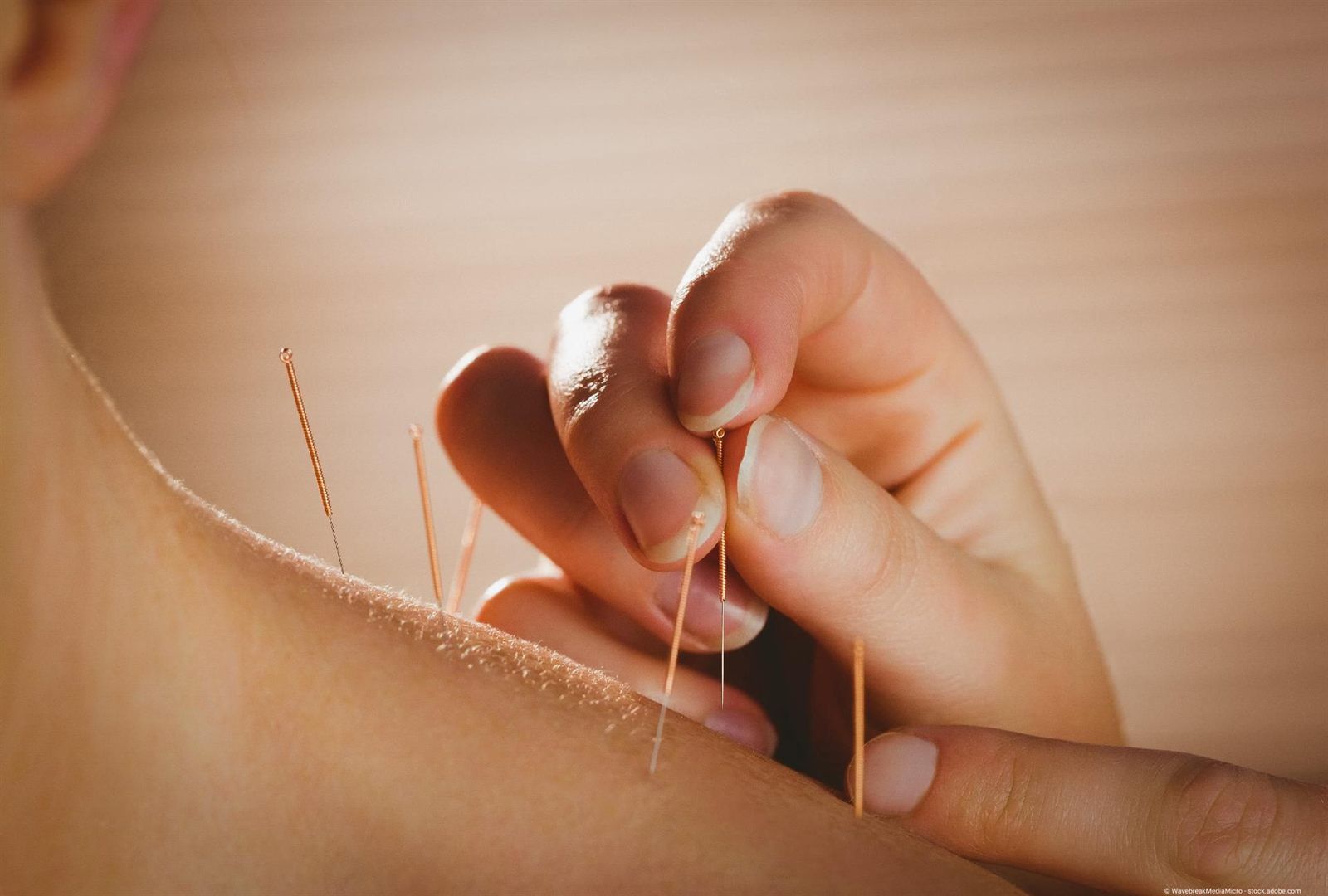
Fine needles at selected points on the body or the outer ear. Prof. Schulte-Uebbing has been a member of the German Medical Association for Acupuncture (DÄGfA) for decades.
A local anaesthetic is injected precisely into the skin, at painful muscle points or at scars. The method is based on the idea of interrupting irritation and stimulating regulation.
Small amounts of selected active substances are introduced with very fine needles into the skin over the painful area. The aim is to treat where the symptoms arise.
Platelet-rich plasma is obtained from your own blood and injected for musculoskeletal complaints, for example at joints, tendons and ligaments. The aim is to support the body's own regeneration processes.
Individually tailored infusions as a supportive treatment for acute and chronic complaints. The composition is based on your findings and is discussed with you beforehand.
Where hormones, the thyroid or a nutrient deficiency play a role, we include them in your plan, for example with cycle-related headaches or period pain.
From research
Over more than four decades, more than 400 scientific publications have been written – on gynaecology, oncology, environmental medicine, hormones, immunology and naturopathy. This knowledge informs every consultation with your gynaecologist in Munich.
Endometriose – Wenn rätselhafte Schmerzen quälen. Netzwerk Frauengesundheit, 2/2012
Is this right for me?
Sudden, very severe pain, pain with fever or during pregnancy, paralysis or numbness must be assessed immediately: on-call medical service 116 117, or 112 in an emergency. Back and joint complaints also belong, where necessary, in the hands of orthopaedic or neurological specialists.
In four steps
Call us on 089 299655 or book online via Doctolib. Please bring previous findings, imaging results and your list of medication.
We ask in detail: where, when and how strongly does it hurt? Then we examine you thoroughly, with ultrasound and laboratory tests where necessary.
We discuss the findings and put together an individual plan. You will learn which methods may be suitable, how they work and what risks they carry.
Treatments take place in a calm setting at our practice. We regularly discuss with you how you are doing and adapt the plan.
Transparent from the start
The medical assessment of your pain is billed to statutory (GKV) or private health insurance, depending on your insurance status. Neural therapy, mesotherapy, PRP and infusions are mostly self-pay services under the German fee schedule for doctors (GOÄ). Statutory health insurance covers acupuncture only in narrowly specified cases, for example certain chronic back or knee pain. We will tell you before treatment what costs to expect.
What our patients say
“Competent doctor!”
“Absolutely recommendable! Both the professor and the staff are competent, kind and friendly.”
“Wonderful doctor. I went there with my wife to accompany her because she was so terribly afraid. She says so herself too. He is very empathetic and gives you a great feeling of being in very, very good hands there. The team is lovely and …”
Expertise, clearly explained
The background in detail – click to expand.
Holistic pain therapies are part of the individual treatment plans that we put together under the supervision of Prof. Dr. Claus Schulte-Uebbing. Our practice combines modern, guideline-based conventional medicine with Traditional Western and Chinese Medicine and naturopathy. For over 30 years we have been diagnosing and treating individually, integratively and holistically. For pain therapy, this means: we do not look only at the painful spot, but at the whole person – body, soul and mind. Hormones, metabolism, the immune system, sleep and everyday strain can influence how pain arises and how strongly it is experienced. That is why we combine conventional medical assessment with complementary methods tailored to you individually.
Acupuncture and ear acupuncture have been an important area of focus at our practice for decades. In pain therapy we use them as a complement: for headaches, migraine and period pain, for lumbago and sciatica, for osteoporosis, osteoarthritis and rheumatism. Also included are shoulder-arm syndrome, complaints of the cervical, thoracic and lumbar spine, hip, knee and elbow pain, and pain from adhesions and scars. Statutory health insurance recognises acupuncture for certain chronic back and knee pain; for many other applications effectiveness has not been proven. Prof. Schulte-Uebbing holds the additional qualification in acupuncture, the acupuncture diploma A and the “major” diploma B of the DÄGfA, as well as the acupuncture diploma of the Chinese university of Tianjin. More on our acupuncture page.
Both methods work with injections. In neural therapy, a local anaesthetic is injected – into the skin as small wheals, at painful muscle points or along scars. It is based on the idea that irritation can be interrupted via the nervous system and that regulatory processes can be stimulated. In mesotherapy, small amounts of selected active substances are introduced with fine needles into the skin over the painful area. The thinking behind it: the active substances should be used where the symptoms arise, and in the smallest possible amount. We discuss individually which active substances may be suitable. For both methods, effectiveness is not scientifically proven for every application.
PRP stands for platelet-rich plasma. A little of your blood is taken and processed so that the platelets are concentrated. The plasma is then injected precisely into joints, tendons or ligaments. The aim is to support the body's own regeneration processes in musculoskeletal complaints. The evidence varies depending on the application. In pain therapy we use infusions as a supportive treatment for acute and chronic complaints. We tailor their composition individually to your findings and discuss it with you beforehand. More on our pages on PRP for joints and on infusions.
Pelvic and period pain can have various causes. These include endometriosis (tissue similar to the lining of the womb occurring outside the womb), fibroids (benign nodules of muscle tissue in the womb), cysts, inflammation or adhesions after operations. Hormonal fluctuations during the cycle and the menopause can also affect headaches and migraine. Endometriosis is an area of focus at our practice. Prof. Schulte-Uebbing has published numerous articles on it, including “Endometriosis – When Mysterious Pain Torments” (Netzwerk Frauengesundheit, 2012). That is why gynaecological assessment comes first at our practice, before complementary methods are used.
Good questions. Clear answers.
Can't find your question? Give us a call – we will take the time.
No. You can also come if the cause is still unknown. Then the assessment comes first: conversation, examination, ultrasound and laboratory tests. Some causes belong in other specialties. In that case, we will tell you openly and recommend the right path.
The needles are very fine. As the needle goes in, you feel a brief prick, and afterwards possibly a dull feeling of pressure or warmth. How strongly this is felt varies from person to person. Tell us if anything feels uncomfortable.
That is individual and depends on your symptoms, how long you have had them and the methods chosen. We do not promise a fixed number of sessions. After a few treatments we discuss together whether the approach is right for you or whether we should change something.
Yes. Please do not stop prescribed medication on your own. Bring a list of everything you take, including over-the-counter products. We take it into account in our planning, for example blood thinners before injections, and agree any changes with you and your treating doctors.
Yes, as a complement. We also use acupuncture and PRP for back, neck and joint complaints, together with other methods where appropriate. Imaging, for example X-ray or MRI, belongs in the hands of orthopaedic or radiology specialists. Please feel free to bring any existing findings.
Yes. Endometriosis is an area of focus at our practice. First comes a confirmed diagnosis and guideline-based treatment. Complementary acupuncture, ear acupuncture or other naturopathic methods can be part of your plan. We discuss openly whether this suits you. More on our endometriosis page.
During pregnancy we select methods and active substances with particular care. Together with E. Seiler, Prof. Schulte-Uebbing wrote the textbook “Acupuncture for Pregnancy, Childbirth and the Postnatal Period”. If you have sudden severe pain or bleeding during pregnancy, please call 116 117 immediately, or 112 in an emergency.
The medical assessment is billed to your health insurance or privately, depending on your insurance. Many complementary methods are self-pay services under the GOÄ. Statutory health insurance covers acupuncture only in specified cases. We will tell you before treatment what costs to expect.
Where to read next
We use acupuncture and ear acupuncture as a complement – for pain, hormonal and cycle disorders, exhaustion or fertility.
 Example image
In neural therapy, we inject a local anaesthetic into selected areas – as a complementary method.
Mesotherapy delivers small amounts of selected active ingredients directly into the skin – for skin appearance, hair growth or pain.
We are happy to be there for you too
Do you have unexplained symptoms and would like medical advice, or are you coming to us with an existing diagnosis? We warmly welcome you to our practice in the centre of Munich.