 Example image
Magnetic field therapy
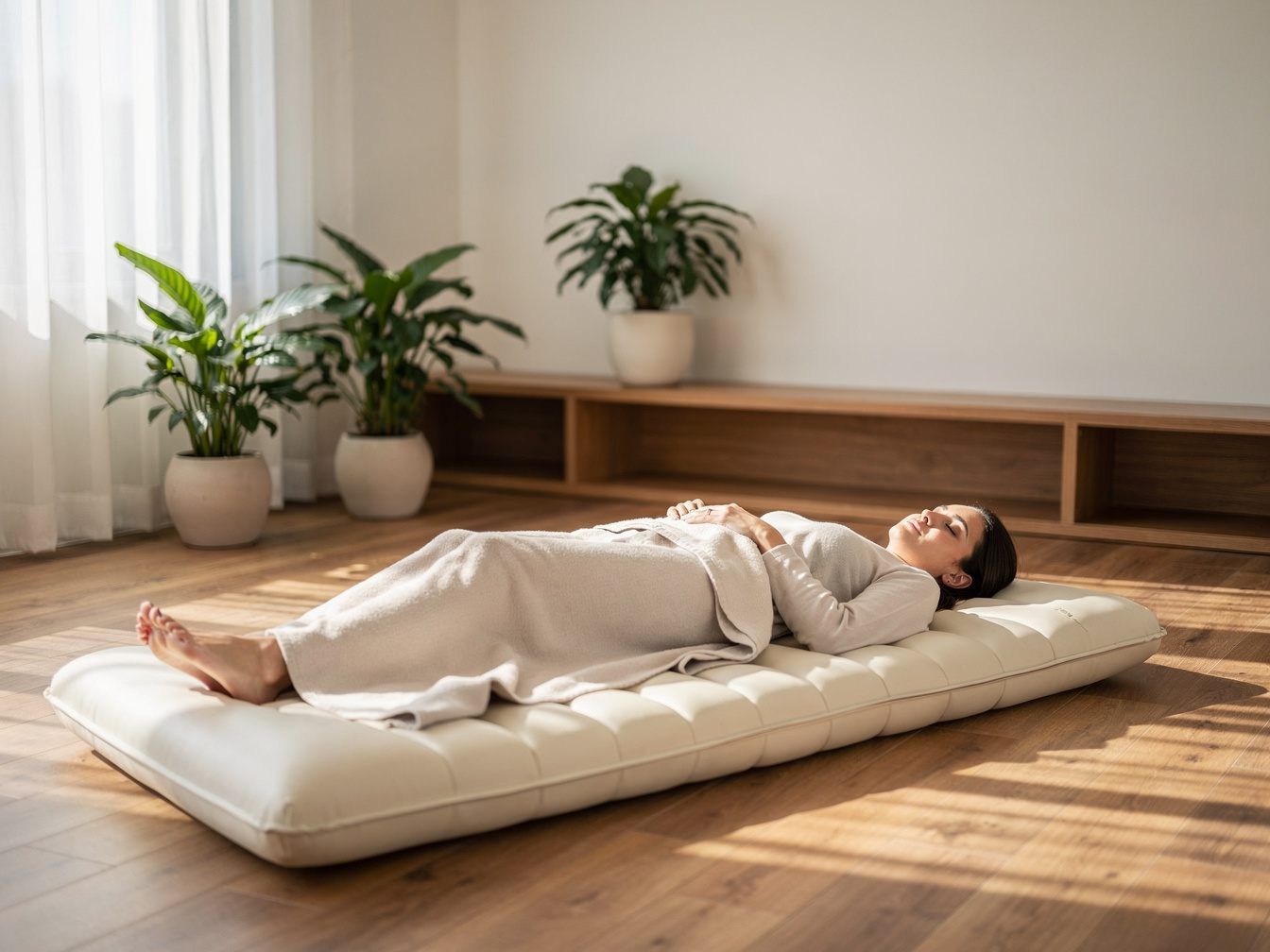
In magnetic field therapy with Magnetodyn, magnetic fields act on the body from outside – gently and without any puncture.

Gynaecology · Incontinence & pelvic floor
Talk about it openly. Find ways together.
Unwanted urine leakage when coughing, laughing or exercising is not a fate you have to keep silent about. At our practice in Munich we thoroughly assess a weak bladder and pelvic floor and discuss pelvic floor training, hormonal treatment and Neocontrol magnetic field therapy – for prevention and treatment.

When to come to us
When coughing, sneezing, laughing, jumping or lifting, you lose a few drops of urine or more.
You need to go to the toilet very often and suddenly, and sometimes do not make it in time.
Since childbirth or since the menopause, your pelvic floor has felt weaker, or you notice a feeling of prolapse.
You want to strengthen your pelvic floor before symptoms develop – for example after childbirth or before the menopause.
Our approach
Incontinence affects many women – and is still a taboo subject. We take our time and first clarify which form is present: stress incontinence, urge incontinence or a mixed form. Treatment depends on that. The foundation is targeted pelvic floor training. During the menopause we discuss local hormone treatment of the vagina. As a complement we offer Neocontrol, an extracorporeal magnetic field pelvic floor therapy for incontinence prevention and treatment. Prof. Schulte-Uebbing has published on holistic approaches to pelvic floor weakness and on the vaginal use of vitamin D for stress incontinence. If surgery makes sense, we will tell you openly.
We use Neocontrol magnetic field therapy and vaginal vitamin D alongside pelvic floor training and guideline-based treatment, not as a replacement; their effectiveness has not been established for every form of incontinence, and we discuss openly what makes sense for you.
Careful and personal
A consultation, drinking and bladder diary, gynaecological examination, ultrasound and urine test show which form of incontinence is present.
You sit fully clothed on a treatment chair. A magnetic field in the seat is intended to stimulate the pelvic floor muscles to tense and relax repeatedly.
Targeted training is the foundation of treatment. We explain what matters and, where needed, recommend guidance from a physiotherapist.
When oestrogen is lacking in the menopause, the tissue becomes thinner. We discuss local hormone treatment and vaginal vitamin D individually as a complement.
After childbirth, with weak connective tissue or before the menopause, we advise you on how to support your pelvic floor early.
If symptoms persist despite treatment or there is marked prolapse, we explain the surgical options and recommend a urogynaecological assessment.
From research
Over more than four decades, more than 400 scientific publications have been written – on gynaecology, oncology, environmental medicine, hormones, immunology and naturopathy. This knowledge informs every consultation with your gynaecologist in Munich.
Beckenbodenschwäche und Inkontinenz der Frau, Tabuthema und heimliche Volkskrankheit, Ganzheitliche Therapeutische Ansätze, Ihre Gesundheit, 6-2016
Beckenboden-Schwäche der Frau, Ganzheitliche Therapeutische Ansätze , Z. Ärzte f. Naturheilverfahren (ZAEN), 9-2014
Beckenbodenschwäche – Das heimliche Tabuthema vieler Frauen, Ihre Gesundheit, 5/2013
Volkskrankheit Inkontinenz – kann Vitamin D helfen ? Antenne Bayern, München, 4-2012 www.antenne.de/tipp
Is this right for me?
If you have burning when passing urine, fever, blood in the urine or a sudden inability to pass urine, please have yourself examined promptly – outside consultation hours via the on-call medical service on 116 117. With a pacemaker, metal implants in the pelvis or during pregnancy, magnetic field therapy is generally not suitable.
In four steps
By phone on 089 299655 or online via Doctolib. If you like, note down for a few days beforehand when and how often urine leaks.
We talk openly and discreetly about your symptoms, examine you gynaecologically and clarify which form of incontinence is present.
We put together training, hormone treatment, Neocontrol magnetic field therapy and, where appropriate, further steps to suit you.
Neocontrol treatment takes place over several appointments at our practice. Together we check how your symptoms are developing.
Transparent from the start
Patients with statutory (GKV) or private health insurance are warmly welcome at our practice. Statutory health insurers cover the assessment of incontinence and guideline-based treatment; physiotherapy can be prescribed for medical reasons. Neocontrol magnetic field therapy is a self-pay service under the German Fee Schedule for Doctors (GOÄ). You will usually pay yourself for formulations containing vitamin D from the pharmacy. Private insurers reimburse depending on the plan. We will tell you before treatment which costs to expect.
What our patients say
“I have been a patient of Prof. Dr. Schulte-Uebbing for many years and have always been treated very kindly and attentively. The staff are very friendly and the doctor is very competent. Prof. Dr. Schulte-Uebbing always takes time to treat me competently …”
“Prof. Dr. Schulte-Uebbing is a highly competent gynaecologist and environmental medicine specialist with many years of experience, whom I can absolutely recommend. I first came to this practice about 20 years ago because of environmental medicine aspects and since then have been …”
“After moving to Munich, I was looking for a new gynaecologist and came across this practice. From the very first appointment I felt I was in very good hands. The whole practice team is exceptionally friendly. The medical assistants …”
Expertise, clearly explained
The background in detail – click to expand.
With stress incontinence, urine leaks when the pressure in the abdomen rises – when coughing, sneezing, laughing, jumping or lifting. The cause is usually a weakened pelvic floor or urethral closure. With urge incontinence, also called overactive bladder, a sudden strong urge to urinate comes on and the toilet is not always reached in time. Many women have a mixed form. Less common is overflow incontinence, in which the bladder does not empty completely. The distinction matters because treatment depends on it: with stress incontinence, pelvic floor training and, where appropriate, surgery take priority; with urge incontinence, bladder training and medication are more likely to be the focus. A drinking and bladder diary helps you recognise your own pattern.
The pelvic floor is a layer of muscle and connective tissue that supports the bladder, uterus and bowel and closes the outlets. Pregnancy and childbirth, the hormonal changes of the menopause, being overweight, chronic cough, constipation, heavy lifting and congenital weakness of the connective tissue can put it under strain. Even so, many women do not talk about it for a long time. That is why Prof. Schulte-Uebbing has repeatedly brought the subject into the open, for example in “Pelvic floor weakness – the secret taboo subject of many women” (Your Health magazine, 2013) and “Pelvic floor weakness and incontinence in women: a taboo subject and hidden widespread condition, holistic therapeutic approaches” (Your Health magazine, 2016). Our stance: you do not need to feel ashamed, and you do not have to put up with the symptoms. There are many options that we can discuss together.
Neocontrol is an extracorporeal magnetic field pelvic floor therapy. Extracorporeal means that the treatment is carried out from the outside, with no probe in the vagina. You sit fully clothed on a treatment chair, in the seat of which a coil produces a pulsating magnetic field. It is intended to stimulate the nerves of the pelvic floor so that the muscles repeatedly tense and relax – similar to a workout, only without any effort of your own. Our practice sees Neocontrol as a supportive option for prevention and treatment, together with hormonal treatment and targeted pelvic floor training. The evidence from studies is not consistent; we discuss openly whether the method is suitable for you. During pregnancy, with a pacemaker or with metal implants in the pelvis, the treatment is generally not suitable.
With the menopause, the oestrogen level falls. The lining of the vagina and urethra becomes thinner and the connective tissue loses firmness. This can encourage incontinence and worsen symptoms such as a frequent urge to urinate or recurrent bladder infections. Local hormone treatment of the vagina with low-dose oestrogen is a recognised option. Prof. Schulte-Uebbing has also studied the vaginal use of vitamin D for stress incontinence and presented it, among other places, at the International Vitamin D Congress at the Charité in Berlin (2013). One related publication is “Stage I and II Stress Incontinence (SIC): High dosed vitamin D may improve effects of local estriol” (Dermato-Endocrinology, 2016). This is a field of research; there is no guideline recommendation for it. Whether such a formulation is suitable for you, we discuss individually.
Incontinence prevention starts early. After childbirth, postnatal exercises support the pelvic floor; the costs are usually covered by statutory health insurance (GKV). In everyday life, you relieve the pelvic floor by lifting heavy loads correctly, avoiding constipation, keeping to a healthy weight and drinking enough. Pelvic floor training makes sense when it is properly guided and practised regularly, for example with a specialist physiotherapist. During the menopause it is worth raising symptoms early. As a complement, Neocontrol magnetic field therapy can be used for prevention, for example if you find training on your own difficult. We advise you on which steps suit your stage of life.
If stress incontinence remains distressing despite training and complementary treatment, surgery may be an option. Often a tension-free tape is placed under the urethra to support it when you cough or sneeze. For prolapse of the bladder, uterus or bowel there are various procedures that lift the organs back up. Such procedures are carried out in clinics specialising in urogynaecology. We explain the options, benefits and risks, recommend a urogynaecological assessment where needed, and support you before and after the procedure. Even after surgery, a well-trained pelvic floor remains important. Whether and when a procedure makes sense is your decision – well informed and without pressure.
Good questions. Clear answers.
Can't find your question? Give us a call – we will take the time.
You stay clothed and sit relaxed on a treatment chair. Many women feel a tingling and the rhythmic tensing of the pelvic floor muscles. The strength of the magnetic field can be adjusted. Tell us if anything is uncomfortable.
Neocontrol is carried out as a series of appointments. How many appointments make sense, and at what interval, depends on your symptoms and progress. We discuss this with you before starting and check together along the way how you are doing.
No. Many women are affected by a weak bladder, whether after childbirth, during the menopause or for no apparent reason. For us it is a medical topic like any other. We talk about it with you openly, discreetly and without rush.
Yes, the pelvic floor can be trained at any age – even years after childbirth or after the menopause. The important thing is to find the right muscles and practise regularly. Guidance from a physiotherapist is helpful. Alongside this, we discuss whether Neocontrol treatment is suitable for you.
With stress incontinence, urine leaks when pressure in the abdomen rises, for example when coughing, laughing or exercising. With urge incontinence, a sudden strong urge to urinate comes on and the toilet is not reached in time. Many women have a mixed form. The distinction matters because treatment depends on it.
After the postnatal period, postnatal exercises come first. If symptoms such as urine leakage or a feeling of prolapse remain afterwards, please feel free to contact us. We examine you, clarify the cause and discuss further steps – from guided training to Neocontrol treatment.
Statutory health insurers cover the assessment and guideline-based treatment; physiotherapy can be prescribed for medical reasons. Neocontrol magnetic field therapy is a self-pay service under the German Fee Schedule for Doctors (GOÄ). Private insurers reimburse depending on the plan. We will tell you beforehand which costs to expect.
Usually not as a first step. Pelvic floor training, hormone treatment and complementary methods generally come first. Surgery can make sense if symptoms remain distressing despite this or if there is marked prolapse. In that case we recommend a urogynaecological assessment and support you.
Where to read next
Example image
In magnetic field therapy with Magnetodyn, magnetic fields act on the body from outside – gently and without any puncture.
 Example image
We support you through the menopause – with time for your questions, hormone analysis and treatment with or without hormones.

We compensate for hormone deficiency with bioidentical hormones – individually planned, carefully weighed up and regularly monitored.
We are happy to be there for you too
Do you have unexplained symptoms and would like medical advice, or are you coming to us with an existing diagnosis? We warmly welcome you to our practice in the centre of Munich.