
Hormonal disorders
We look for the cause of your hormonal disorder – with a thorough hormone analysis and a treatment that suits you.

Naturopathy · Traditional Western Medicine
European medicine, placed in a medical context.
Are you interested in Hildegard medicine and European herbal medicine? At our practice in Munich, Prof. Dr. Schulte-Uebbing combines modern, guideline-based gynaecology with Traditional Western Medicine. He has published numerous articles and given lectures on the subject. We advise you individually and honestly.
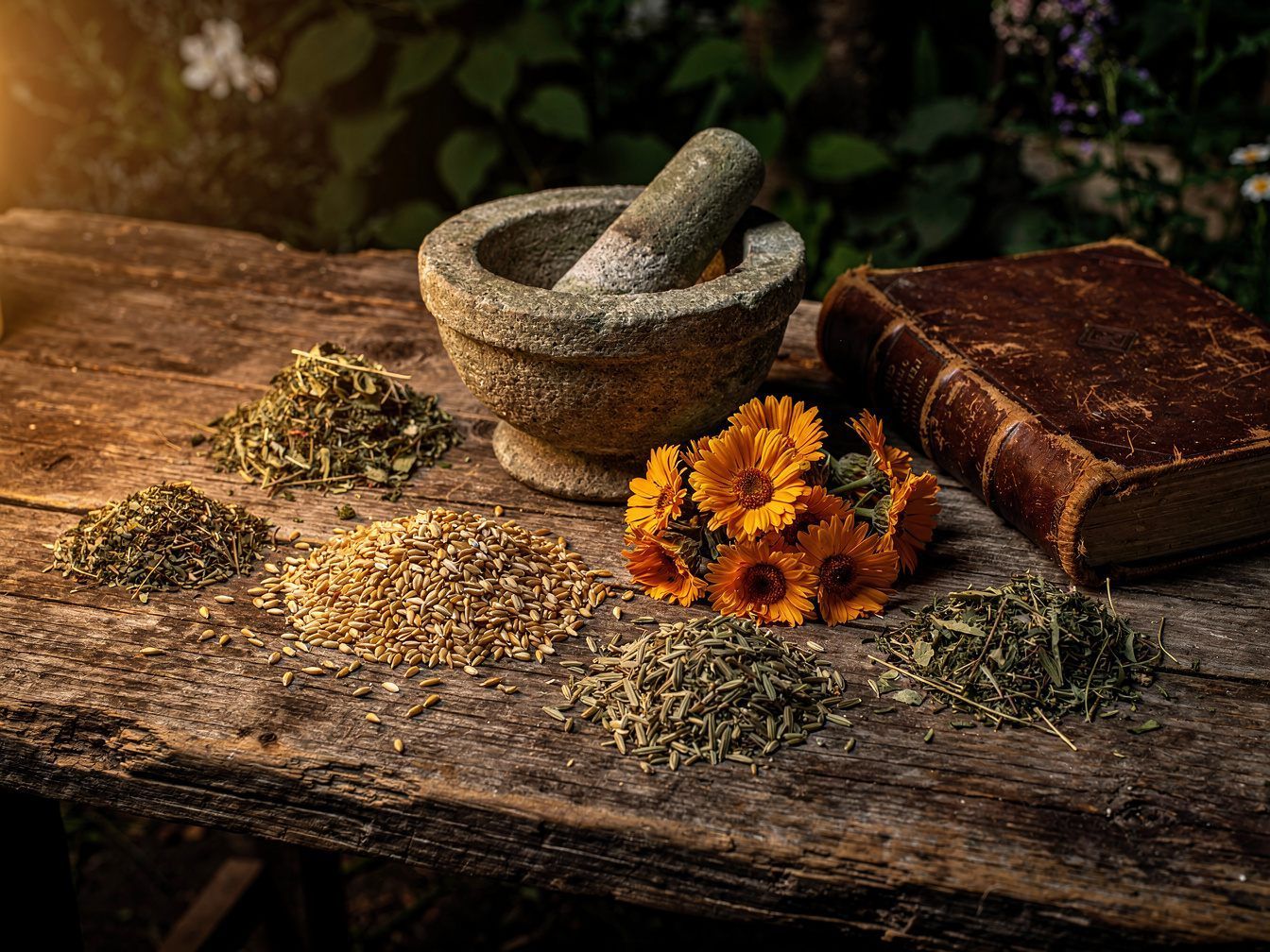
When to come to us
Your cycle is irregular, your bleeding is light or absent, and alongside conventional medicine you would also like to learn about herbal approaches.
During the menopause or with a hormonal imbalance, you are looking for support that includes medicinal plants and nutrition.
You know of Hildegard von Bingen and would like to know how her medicine is viewed in medical terms today.
You would like to shape your diet and daily life according to the principles of Traditional Western Medicine and are looking for expert advice.
Our approach
Our practice stands for a synthesis of modern, guideline-based conventional medicine, Traditional Western and Chinese Medicine and naturopathy – medicine that sees the whole person. We begin with a detailed conversation and a thorough diagnostic assessment. Conditions that require conventional medical treatment take priority. Complementary to this, Traditional Western Medicine can be part of your individual plan. This includes medicinal plants, nutritional principles and suggestions for an orderly way of life, for example from the medicine of Hildegard von Bingen. We see people as a whole, with body, soul and mind.
Traditional Western Medicine complements guideline-based treatment but does not replace it; its effectiveness is not scientifically proven for every application, and we discuss openly what makes sense for you.
Careful and personal
Besides symptoms and findings, we ask about diet, sleep, exercise, stress and daily rhythm – areas that are part of health in Traditional Western Medicine.
Phytotherapy means treatment with medicinal plants. We select herbal preparations according to your symptoms and findings and watch for interactions with your other medication.
Suggestions based on the nutritional principles of Traditional Western Medicine and of Hildegard von Bingen, adapted to your daily life and what you tolerate.
Recipes and principles from the medicine of Hildegard von Bingen, selected by a doctor and integrated into your overall plan.
Classical methods from the European tradition such as bloodletting, only after medical assessment and as a complement.
We coordinate the traditional building blocks with guideline-based treatment, for example with natural hormone therapy or acupuncture.
From research
Over more than four decades, more than 400 scientific publications have been written – on gynaecology, oncology, environmental medicine, hormones, immunology and naturopathy. This knowledge informs every consultation with your gynaecologist in Munich.
Integration der Traditionellen Westlichen Medizin (TWM) in die moderne Frauenheilkunde (Teil 5), Hildegard- Medizin: Beispiele für die Praxis, Zeitschrift für Angewandte Komplementärmedizin, 03/ 2024, S. 64 ff.
Integration der Traditionellen Westlichen Medizin in die moderne Frauenheilkunde, AKOM Fachmagazin für Angewandte Komplementär- Medizin, 7 / 2023
Einblick in die Traditionelle Westliche Medizin – Die Prinzipien einer gesunden Ernährung, Zeitschrift „Die Naturheilkunde“, 5/ 2022
TWM (Traditionelle Westliche Medizin): Theorie und Praxis, Möglichkeiten und Grenzen, Beispiele aus der Gynäkologischen Sprechstunde, Wissenschaftlicher Workshop, Universität Warschau, Polen, 23.11.2019
Is this right for me?
Serious illnesses belong first in guideline-based treatment; medicinal plants do not replace it. During pregnancy and breastfeeding, many herbal remedies are not suitable. For heavy bleeding, sudden severe pain or fever during pregnancy: on-call medical service 116 117, or 112 in an emergency.
In four steps
Call us on 089 299655 or book online via Doctolib. Please bring previous findings and a list of your medication and herbal remedies.
We take time for your medical history, your diet and your daily life and examine you thoroughly, with ultrasound and laboratory tests where necessary.
We discuss what is necessary from a conventional medical point of view and which medicinal plants, nutritional principles or other building blocks suit you as a complement.
You put the recommendations into practice in everyday life. At follow-up appointments we discuss how you are doing and adapt the plan.
Transparent from the start
Conventional medical diagnosis and treatment are billed to statutory (GKV) or private health insurance, depending on your insurance status. Consultations and treatments in Traditional Western Medicine are mostly self-pay services under the German fee schedule for doctors (GOÄ). Statutory health insurance does not usually reimburse herbal remedies. We will tell you before treatment what costs to expect.
What our patients say
“I have been a patient of Prof. Dr. Schulte-Uebbing for many years and have always been treated very kindly and attentively. The staff are very friendly and the doctor is very competent. Prof. Dr. Schulte-Uebbing always takes time to treat me competently …”
“Prof. Dr. Schulte-Uebbing is a highly competent gynaecologist and environmental medicine specialist with many years of experience, whom I can absolutely recommend. I first came to this practice about 20 years ago because of environmental medicine aspects and since then have been …”
“After moving to Munich, I was looking for a new gynaecologist and came across this practice. From the very first appointment I felt I was in very good hands. The whole practice team is exceptionally friendly. The medical assistants …”
Expertise, clearly explained
The background in detail – click to expand.
Traditional Western Medicine (TWM) refers to traditional European medicine. Its roots extend from the physicians of antiquity such as Hippocrates and Galen, through the monastic medicine of the Middle Ages, to modern times. Its basis was the theory of the four humours: according to this idea, a person stays healthy when the body fluids are in balance. TWM includes medicinal plants, dietary rules, an orderly way of life with exercise, rest and sleep, and eliminative methods such as bloodletting. The theory of the four humours is regarded as outdated today. Much experience with medicinal plants lives on, however, in modern phytotherapy. TWM is the European counterpart of Traditional Chinese Medicine. Prof. Schulte-Uebbing compared the two in a lecture: “Comparison of Traditional Western Medicine (T.W.M.) with Traditional Chinese Medicine (T.C.M.)” (University of Opole, 2013).
In the 12th century, Hildegard von Bingen was an abbess, scholar and practitioner of medicine. Her writings “Physica” and “Causae et curae” describe medicinal plants, foods and illnesses. Today's Hildegard medicine takes up this tradition, especially dietary rules, herbal preparations and the idea of due measure. Important for you: Hildegard's texts are a significant historical testimony, but not scientifically tested treatment instructions. Prof. Schulte-Uebbing therefore places them in a medical context. He has given numerous lectures and seminars on the subject, for example at international Hildegard congresses in Konstanz. One seminar was titled “Naturopathic and Medical Aspects in Hildegard von Bingen (Books Physica, Causae et curae, Scivias, Ordo virtutum)” (Munich, 2012).
In the article series “Integration of Traditional Western Medicine (TWM) into Modern Gynaecology”, Prof. Schulte-Uebbing describes how traditional principles can be combined with today's gynaecology. The articles appeared in 2023 and 2024 in the Journal of Applied Complementary Medicine. One part is devoted to cycle disorders, light menstrual bleeding (hypomenorrhoea) and absence of periods (amenorrhoea). Further parts show examples of Hildegard medicine for practice. He addressed hormonal questions such as progesterone deficiency and oestrogen dominance in the lecture “Endocrinological and Immunological Aspects of TWM (Traditional Western Medicine): Phytosterols, P Deficiency, E Dominance” (Konstanz, 2014). Phytosterols are plant substances whose structure resembles cholesterol.
Nutrition is a core area of Traditional Western Medicine. It stresses moderation and regularity, choosing foods according to tolerance and season, and avoiding foods that are hard to digest. In the Hildegard tradition, spelt plays a special role. Some foods are regarded there as so-called “kitchen poisons” that should preferably be avoided. On this, Prof. Schulte-Uebbing published, for example, “Nutrition Principles of Traditional Western Medicine (T.W.M.)” (Your Health, 2012) and “Foods and Kitchen Poisons” (CO MED, 2012). In the journal “Die Naturheilkunde”, “An Insight into Traditional Western Medicine – The Principles of a Healthy Diet” followed in 2022. We tailor nutritional recommendations to your findings, intolerances and preferences.
Phytotherapy, treatment with medicinal plants, also has its place in modern medicine. There are studies on some herbal medicines, but not on many traditional recipes. Medicinal plants too can have side effects and interact with medication, for example with hormone preparations or blood thinners. That is why we select herbal remedies under medical supervision and ask precisely about your other medication. The possibilities and limits of TWM were also the subject of a workshop by Prof. Schulte-Uebbing: “TWM (Traditional Western Medicine): Theory and Practice, Possibilities and Limits, Examples from the Gynaecological Consultation” (University of Warsaw, 2019). On phytotherapy he spoke, among other things, about “Traditional Western Phytotherapy, Examples from Gynaecological Practice” (Konstanz, 2010).
Good questions. Clear answers.
Can't find your question? Give us a call – we will take the time.
Both are systems of medicine that have grown over centuries, each with its own ideas of health and illness. TWM comes from European tradition, TCM from China. Acupuncture belongs to TCM; Hildegard medicine and European herbal medicine belong to TWM. In our practice both are used as complements.
For most traditional recipes there are no meaningful studies. We tell you openly what is proven and what rests on experience and tradition. We therefore use Hildegard medicine only as a complement, never in place of necessary conventional medical treatment.
This is often possible, but it must be checked. Medicinal plants can interact with other medication, for example hormone preparations, blood thinners or antidepressants. Please bring a complete list of your medication and dietary supplements. We coordinate everything.
No. We give you suggestions based on the nutritional principles of Traditional Western Medicine that fit your daily life. How far you follow them is up to you. In the case of intolerances or allergies, we take your findings into account.
During pregnancy and breastfeeding, many herbal remedies have not been studied sufficiently. We are therefore particularly cautious and use only what is justifiable after careful consideration. Nutritional principles can accompany you during this time as well. For acute symptoms, call 116 117, or 112 in an emergency.
If you are trying to conceive, a thorough assessment and, where necessary, guideline-based treatment come first, including of the thyroid and hormones. Nutrition, lifestyle and selected herbal remedies can complement this as part of your plan. We discuss openly whether this suits you. More on our fertility page.
Conventional medical diagnosis and treatment are billed to your health insurance or privately, depending on your insurance status. Consultations in Traditional Western Medicine and herbal remedies usually have to be paid for by the patient; private insurers reimburse depending on the plan. We will tell you before treatment what costs to expect.
Prof. Schulte-Uebbing has published numerous articles and given lectures on Traditional Western Medicine and on Hildegard von Bingen. Most recently the series “Integration of Traditional Western Medicine (TWM) into Modern Gynaecology” appeared (Journal of Applied Complementary Medicine, 2023–2024). You will find a selection on this page and under Publications.
Where to read next
We look for the cause of your hormonal disorder – with a thorough hormone analysis and a treatment that suits you.
We compensate for hormone deficiency with bioidentical hormones – individually planned, carefully weighed up and regularly monitored.
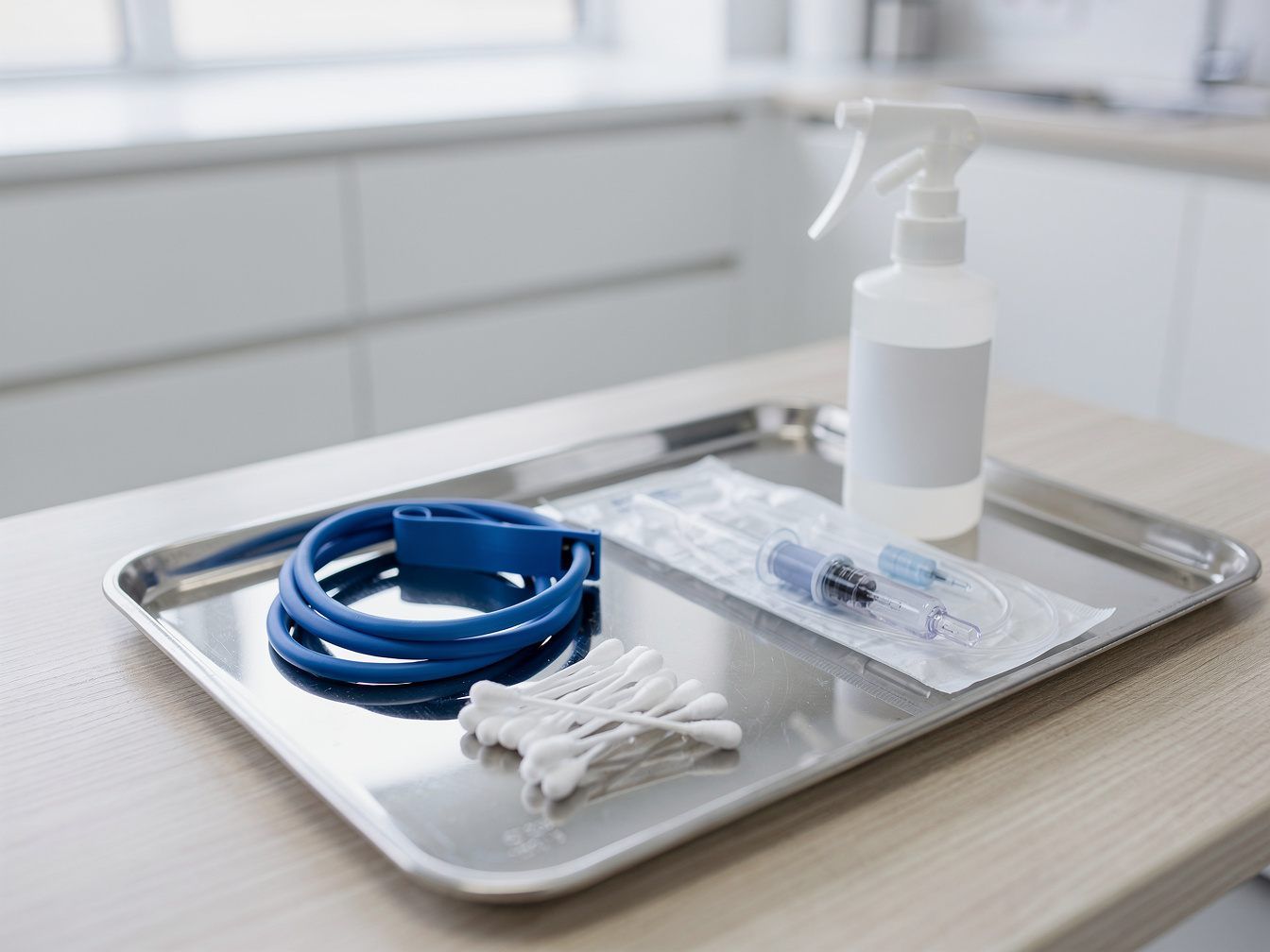 Example image
Bloodletting is a traditional naturopathic method that we use as a complement and only after medical assessment.
We are happy to be there for you too
Do you have unexplained symptoms and would like medical advice, or are you coming to us with an existing diagnosis? We warmly welcome you to our practice in the centre of Munich.