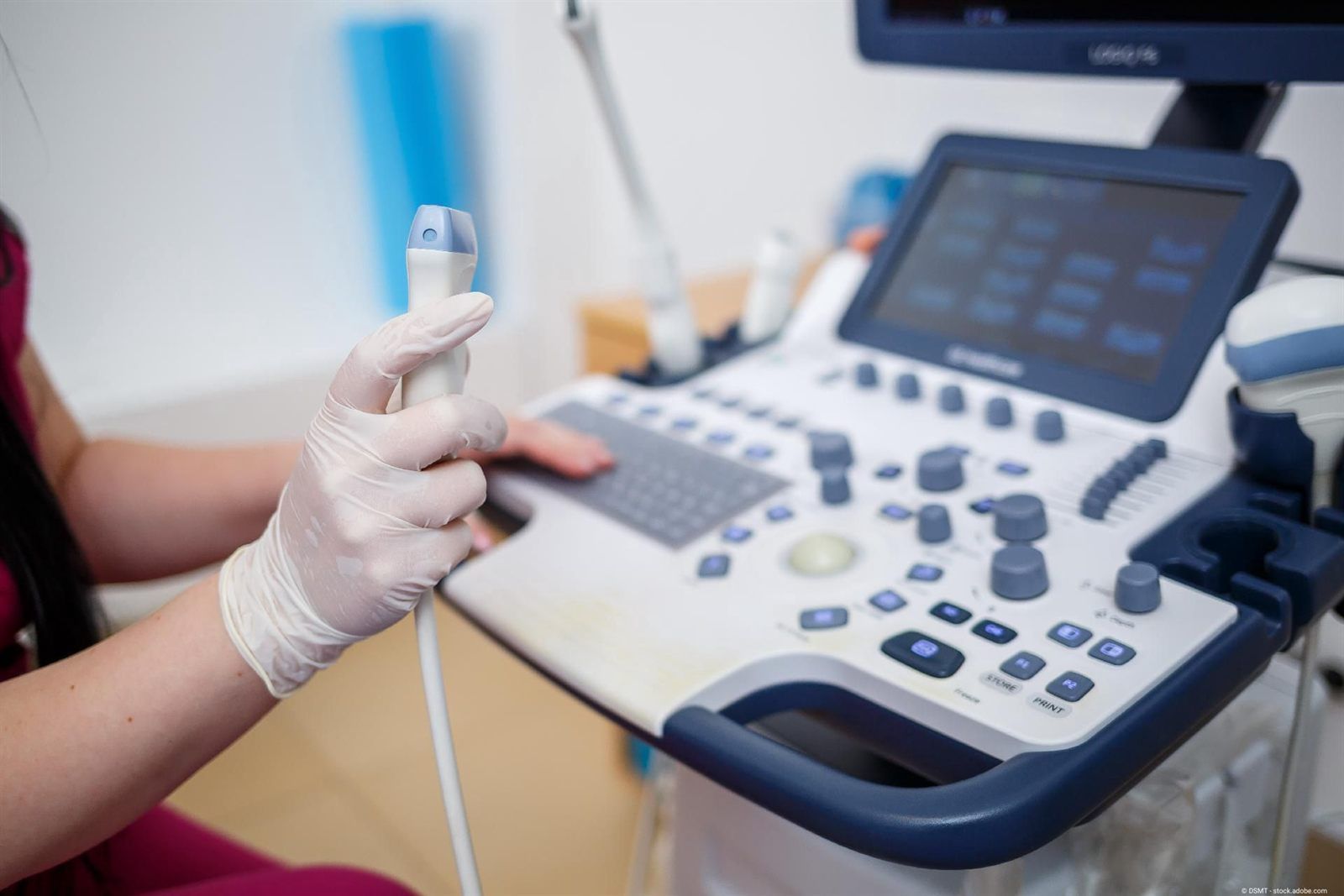
Ultrasound & 4D ultrasound
Ultrasound and 4D ultrasound show the uterus, ovaries and breast gently, without radiation and in real time.

Gynaecology · Cysts
Clarify first, then decide calmly.
Ovarian cysts – fluid-filled cavities on the ovary – are common and usually harmless. Many go away on their own. At our practice in Munich we investigate cysts with ultrasound, monitor how they develop and take a holistic look at your cycle and hormones, so that you know where you stand.
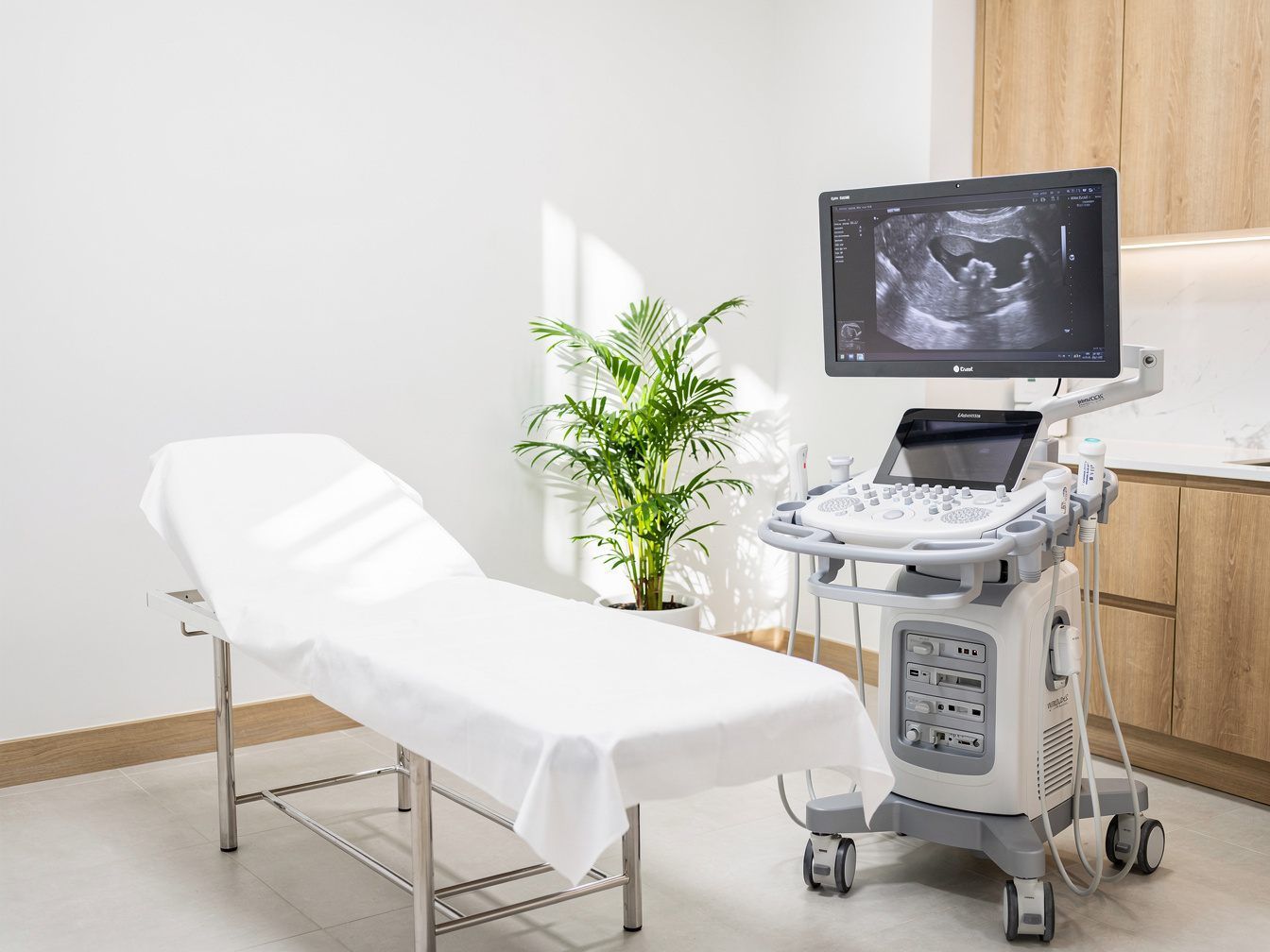
When to come to us
A cyst on the ovary was found during an examination, and you would like to know whether it is harmless and what to do now.
You feel a pulling sensation, pressure or pain on one side, for example during exercise or intercourse.
Your periods are irregular, you have spotting between periods or you suspect PCOS – polycystic ovary syndrome.
Cysts keep forming, and you would like to get to the bottom of possible causes in your hormonal balance.
Our approach
Most ovarian cysts are functional cysts. They form during the normal cycle and often go away on their own. That is why our approach is: assess thoroughly, do not act hastily. With vaginal ultrasound we assess the size, shape and contents of the cyst and compare the findings over time. If needed, we measure hormone levels. We look at recurring cysts in the context of your cycle, hormonal balance, endometriosis or PCOS. Alongside conventional care, we also offer naturopathic methods for cycle and hormonal disorders. If a cyst shows abnormalities or persists, we openly discuss the next step – up to and including surgery.
We use naturopathic methods for cycle and hormonal disorders as a complement, not as a replacement for investigation and follow-up; it has not been proven that they prevent or dissolve cysts, and we will discuss openly what makes sense for you.
Careful and personal
With vaginal ultrasound we can see the size, wall and contents of the cyst. This usually lets us judge well what type of cyst it is.
We check functional cysts again after a few weeks, often at a different point in your cycle. Many are then smaller or have disappeared.
If cysts keep coming back, your cycle is irregular or PCOS is suspected, we measure hormone levels and look at your hormonal balance as a whole.
Cysts containing old blood can point to endometriosis. Endometriosis is one of the main areas of focus of our practice – we will advise you in detail on the next steps.
For cycle and hormonal disorders we also offer natural hormone therapy and acupuncture alongside conventional care – tailored to you.
If a cyst persists, grows or looks abnormal, we explain your options, usually keyhole surgery (laparoscopy), and support you.
From research
Over more than four decades, more than 400 scientific publications have been written – on gynaecology, oncology, environmental medicine, hormones, immunology and naturopathy. This knowledge informs every consultation with your gynaecologist in Munich.
Benign and Malign Adnexa Diseases, Zilele FMF Oradea, Noiembr. 2013, Editia XXII
Is this right for me?
Sudden, very severe lower abdominal pain, often with nausea, vomiting, fever or circulatory problems, can point to a ruptured or twisted cyst – call 112 immediately in that case. The same applies to severe pain if you may be pregnant. Outside consultation hours, the on-call medical service is available on 116 117.
In four steps
By phone on 089 299655 or online via Doctolib. Please bring any existing ultrasound reports – comparison is particularly helpful with cysts.
We ask about your cycle, symptoms and medical history and carry out a gynaecological examination with vaginal ultrasound.
We explain the findings in plain terms and discuss whether waiting, a follow-up check, treatment or further investigation makes sense.
We monitor the cyst over time, treat any underlying hormonal disorders and support you if an operation becomes necessary.
Transparent from the start
Patients with statutory (GKV) or private health insurance are warmly welcome at our practice. Statutory health insurers cover ultrasound for symptoms, abnormal findings and follow-up of a known cyst. An ovarian ultrasound without a medical reason, as pure screening, is a self-pay service under the German Fee Schedule for Physicians (GOÄ), as are acupuncture and extended hormone analyses. We will tell you before treatment what costs will arise.
What our patients say
“Wonderful doctor. I went there with my wife to accompany her because she was so terribly afraid. She says so herself too. He is very empathetic and gives you a great feeling of being in very, very good hands there. The team is lovely and …”
“Very friendly and competent team. I have been a patient for years and am very satisfied, especially with the immune infusions, particularly after past illnesses/operations.”
“I have been a patient of Prof. Dr. Schulte-Uebbing for many years and have always been treated very kindly and attentively. The staff are very friendly and the doctor is very competent. Prof. Dr. Schulte-Uebbing always takes time to treat me competently …”
Expertise, clearly explained
The background in detail – click to expand.
A cyst is a fluid-filled cavity. Cysts on the ovary are common, especially during the fertile years. Most are functional cysts that develop as part of the cycle. There are also other types: endometriosis cysts, which contain old blood and are also called chocolate cysts because of their dark colour; dermoid cysts, which can contain different kinds of tissue such as fat or hair; and cystadenomas, benign growths of glandular tissue. These types do not usually go away on their own. Whether a cyst is functional can often be judged well on ultrasound, and sometimes only through a follow-up check. Prof. Schulte-Uebbing has given a presentation on benign and malignant diseases of the ovaries and fallopian tubes: “Benign and Malign Adnexa Diseases” (Zilele FMF Oradea, 2013).
Every month, a follicle matures in the ovary. If it does not rupture at ovulation, a follicular cyst can develop. After ovulation the corpus luteum forms; if it fills with fluid or blood, it is called a corpus luteum cyst. Both depend on the hormones of the cycle and usually go away on their own within a few cycles. That is why waiting and monitoring with ultrasound is often the right approach. Hormonal treatment can reduce the formation of new functional cysts but, as far as we currently know, hardly speeds up the disappearance of existing ones. If cysts keep coming back, we look more closely at your cycle and hormonal balance – for example at an imbalance between oestrogen and progesterone.
Certain features on ultrasound are a reason to look more closely: solid areas, septa, a thickened wall, abnormal blood flow, marked growth or a cyst that persists over several check-ups. We also assess cysts after the menopause more carefully, because ovulation no longer takes place then and functional cysts are less common. That does not mean something serious is going on. It means we want to be certain. Further tests can then make sense, such as blood tests, magnetic resonance imaging (MRI) or keyhole surgery in which the cyst is removed and examined in the laboratory (histology). We explain every step and support you along the way.
With PCOS, polycystic ovary syndrome, ultrasound shows many small follicles around the edge of the ovaries. Despite the name, these are not true cysts but follicles that do not mature. An irregular cycle and signs of raised male hormones often go with it. Endometriosis cysts form when tissue similar to the lining of the uterus settles on the ovary. They can cause pain and affect fertility. Endometriosis is one of the main areas of focus of our practice. With both conditions, it is not enough to look at the cyst alone. We look at hormones, cycle, inflammation and life circumstances and advise you holistically. You will find more detail on our pages on PCOS and Endometriosis.
Rarely, an ovary with a larger cyst can twist around its own axis. This ovarian torsion cuts off the blood supply and causes sudden, very severe, usually one-sided pain, often with nausea and vomiting. It must be treated in hospital immediately. A cyst can also rupture. This is often harmless and only hurts briefly; however, if there is bleeding into the abdominal cavity, circulatory problems can occur. If you have sudden severe lower abdominal pain, circulatory problems or fever, please call 112. If pregnancy is possible, an ectopic pregnancy must also be ruled out in cases of severe pain. Outside our consultation hours you can reach the on-call medical service on 116 117.
Cysts are usually a sign of the normal cycle. But if they keep recurring or cycle disorders are added, it is worth looking at the bigger picture. We ask about stress, sleep, weight, diet and environmental burdens, and we look at your hormonal balance, thyroid and possible inflammation. Prof. Schulte-Uebbing has worked for many years on hormonal disorders in women and on environmental substances that act like hormones. Alongside conventional care, we offer natural hormone therapy and acupuncture for cycle and hormonal disorders. These methods do not replace investigation or any necessary surgery. Whether they prevent cysts has not been proven; their aim is to support your cycle and well-being.
Good questions. Clear answers.
Can't find your question? Give us a call – we will take the time.
Usually not. Most ovarian cysts are functional, benign and go away on their own. A careful ultrasound examination assessing shape and contents is important. If the cyst shows abnormalities or persists, we investigate further – to be certain, not because we expect the worst.
Functional cysts, that is follicular and corpus luteum cysts, usually regress within a few cycles. That is why we check them again with ultrasound after a few weeks, often at a different point in the cycle. Endometriosis or dermoid cysts, on the other hand, do not usually go away on their own.
Only in certain cases. Surgery, usually keyhole surgery (laparoscopy), can make sense if a cyst persists for a long time, grows, causes symptoms or looks abnormal on ultrasound. Where possible, the ovary is preserved. We explain the reasons and support you before and after the procedure.
In most cases, yes. With a larger cyst we sometimes advise avoiding sports with abrupt twisting movements or jumping for a while, because the ovary can rarely twist. Sudden, very severe pain is an emergency – call 112 in that case.
Functional cysts do not usually affect fertility. It can be different with endometriosis cysts or PCOS, because the underlying condition can affect ovulation or the fallopian tubes. If you are trying for a baby, we therefore carefully investigate the cause and hormones and advise you, including before any possible operation.
A cyst is a single, fluid-filled cavity. With PCOS you see many small follicles that do not mature – often with an irregular cycle and raised male hormones. PCOS is a hormonal disorder and needs a different treatment. You can read more on our page on PCOS.
For symptoms, follow-up of a known cyst or abnormal findings, statutory health insurance covers the ultrasound. An ovarian ultrasound without a medical reason, as pure screening, is a self-pay service under the GOÄ. We will tell you beforehand what costs will arise.
After the menopause, ovulation no longer takes place, so functional cysts are less common. Even then, simple, small cysts are often harmless. We assess them carefully on ultrasound, monitor them over time and arrange further tests if anything looks abnormal.
Where to read next
Ultrasound and 4D ultrasound show the uterus, ovaries and breast gently, without radiation and in real time.
 Example image
In polycystic ovary syndrome, we investigate your cycle, hormones and metabolism thoroughly and support you individually – including if you wish to conceive.
 Example image
Endometriosis is a main focus of our practice: thorough diagnostics, guideline-based treatment and complementary naturopathy.
We are happy to be there for you too
Do you have unexplained symptoms and would like medical advice, or are you coming to us with an existing diagnosis? We warmly welcome you to our practice in the centre of Munich.