Hormonal disorders
We look for the cause of your hormonal disorder – with a thorough hormone analysis and a treatment that suits you.

Aesthetics & beauty · Permanent hair removal
Medical advice. Tailored to your skin.
Are you looking for permanent hair removal in Munich that is medically sound? At our gynaecology practice near Marienplatz, laser hair removal takes place after medical advice, tailored to skin type and hair colour. If hair growth is increased, we can also investigate possible hormonal causes if you wish.
When to come to us
You regularly shave, wax or epilate and would like smooth, well-groomed skin in the long term – for example on the legs, underarms or bikini line.
Razor burn, redness or ingrown hairs put a strain on your skin again after every hair removal.
Dark hairs on the upper lip, chin or cheeks bother you in everyday life and are hard to remove inconspicuously.
Hair grows back or grows more strongly on the chin, chest or abdomen – this may have hormonal reasons, which we investigate.
Our approach
With us, hair removal begins with a medical conversation. We look at skin type, hair colour and hair density, ask about medication, skin conditions and sun exposure, and explain what the laser can achieve for you – and what it cannot. As a gynaecology practice we also look out for signs of a hormonal imbalance. If hair grows back or is conspicuously heavy, this may point to PCOS, for example; we then offer to investigate the cause first. We plan the treatment itself as a series of sessions at intervals, because hair grows in cycles. We watch how your skin responds from appointment to appointment.
Laser hair removal aims for a marked, long-term reduction in hair growth; how well it works depends mainly on hair colour and skin type, individual hairs may grow back, and nobody can promise a result for life.
Careful and personal
A medical conversation about your wishes, existing conditions and medication, a look at your skin and hair, and information about the procedure, side effects and realistic results.
If hair grows back or is conspicuously heavy, we investigate possible hormonal causes such as PCOS – with ultrasound and hormone analysis if you wish.
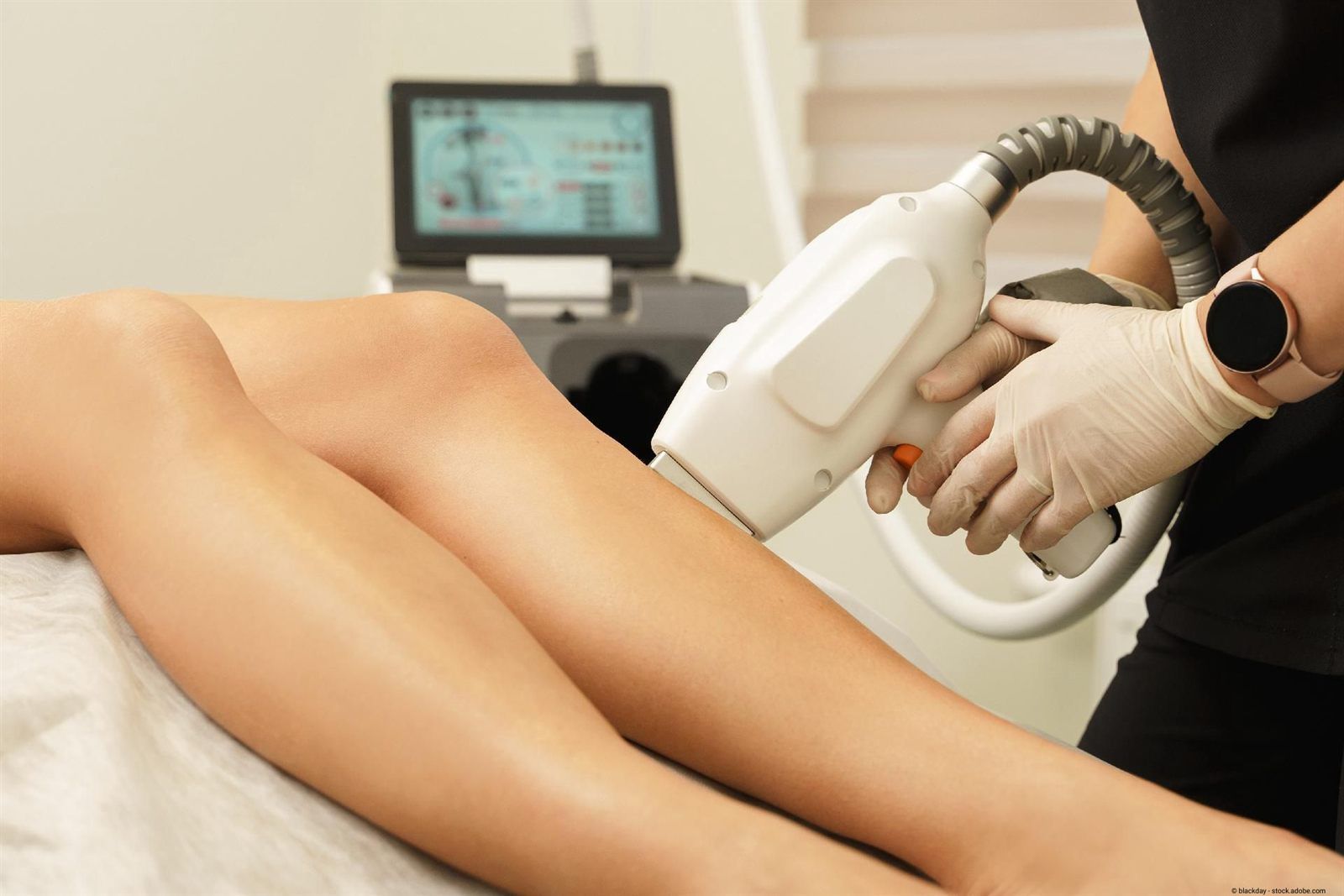
The laser light is absorbed by the pigment in the hair and heats the hair root. The aim is that afterwards it produces no hair, or only fine hair.
Several sessions at intervals of a few weeks, because the laser reaches only hair in the growth phase.
Advice on skincare after every session and on sun protection, so that your skin recovers well.
If individual hairs grow back later, for example because of hormonal changes, further sessions are possible – we discuss this if needed.
From research
Over more than four decades, more than 400 scientific publications have been written – on gynaecology, oncology, environmental medicine, hormones, immunology and naturopathy. This knowledge informs every consultation with your gynaecologist in Munich.
Basiswissen “Tattoos” für Klinik und Praxis, gyn (29) 2024, S.271-275
PLACU- Therapie in der Gynäkologie (Platelet Acupuncture Therapy), Zeitschrift für Angewandte Komplementärmedizin, 05/ 2024, S. 60-65
Tätowierungen und mögliche gynäkologische Folgeerkrankungen, JATROS Gynäkologie und Geburtshilfe 2/ 2024, S.6 ff.
Integration der Traditionellen Westlichen Medizin (TWM) in die moderne Frauenheilkunde (Teil 5), Hildegard- Medizin: Beispiele für die Praxis, Zeitschrift für Angewandte Komplementärmedizin, 03/ 2024, S. 64 ff.
Is this right for me?
Very light, red, grey or white hair contains too little pigment for the laser – we tell you this openly. During pregnancy we postpone treatment. If there is a fresh tan, skin inflammation or conspicuous moles, we do not treat those areas; moles should have a skin check by a dermatologist beforehand.
In four steps
By phone on 089 299655 or online via Doctolib. Please tell us in advance which body areas you would like treated.
We discuss your wishes, medication and existing conditions, look at your skin and hair, and investigate hormonal causes if needed.
You will find out which areas may be treated, roughly how many sessions are needed, how to prepare and what costs will arise.
We treat the areas with the laser over several sessions. Between appointments we watch how your skin and hair respond.
Transparent from the start
Permanent hair removal is an aesthetic treatment and is generally a self-pay service, including for patients with private health insurance. We bill according to the German fee schedule for doctors (GOÄ). The costs depend mainly on the size and number of treatment areas and the number of sessions. We will tell you before treatment what costs will arise. Examinations for a possible hormonal cause, when medically necessary, are billed through your health insurance, depending on your insurance status.
What our patients say
“Wonderful doctor. I went there with my wife to accompany her because she was so terribly afraid. She says so herself too. He is very empathetic and gives you a great feeling of being in very, very good hands there. The team is lovely and …”
“Very friendly and competent team. I have been a patient for years and am very satisfied, especially with the immune infusions, particularly after past illnesses/operations.”
“I have been a patient of Prof. Dr. Schulte-Uebbing for many years and have always been treated very kindly and attentively. The staff are very friendly and the doctor is very competent. Prof. Dr. Schulte-Uebbing always takes time to treat me competently …”
Expertise, clearly explained
The background in detail – click to expand.
In laser hair removal, focused light of a specific wavelength hits the skin. The dark pigment in the hair, melanin, absorbs the energy and converts it into heat. This heat is conducted down to the hair root. The aim is to weaken the root so that it produces no new hair, or only a finer hair. Specialists call this selective photothermolysis: the light acts specifically where there is pigment, and the surrounding skin is meant to be spared as far as possible. This only works if the device and settings suit skin type and hair. That is why a careful medical assessment of skin and hair comes first in every treatment.
In medicine, permanent hair removal means that hair growth is reduced markedly and over a long period. It does not mean that no hair will ever grow again. After a complete series of treatments, individual, mostly finer and lighter hairs may remain, and some hair roots become active again after years. Hormonal changes, for example during the menopause or with PCOS, can also stimulate new hairs. Individual top-up sessions are then possible. Knowing this beforehand helps you put the result in perspective. That is why in the consultation we talk openly about what you can realistically expect for your skin and hair – without promises, but with an honest assessment.
Hair grows in cycles. In the growth phase, the anagen phase, the hair is firmly attached to the root and well pigmented – only then does the laser reach the root effectively. At the same time, only some of the hairs are ever in this phase; the rest are resting or just falling out. That is why several sessions at intervals of a few weeks are needed, so that as many hairs as possible are gradually hit in their growth phase. How many sessions you need depends on body area, hair density, hair colour and hormone levels. You will get an initial assessment in the consultation; as we go along, we adjust the plan.
Dark hair on light skin is well suited: the contrast means the light reaches mainly the hair and less the skin. With darker skin, the skin also absorbs more light; particular caution is needed here to avoid burns or pigment spots. Whether treatment is possible on darker skin depends on the device and the settings – we clarify this in the consultation. Very light, red, grey or white hair contains hardly any melanin, so the laser can barely reach it. Tanned skin is more sensitive. Please therefore avoid sun, sunbeds and self-tanning products before and after the sessions.
When women grow hair where it is otherwise typical in men – for example on the chin, upper lip, chest or abdomen – specialists speak of hirsutism. One possible cause is an excess of male hormones (androgens), for example in polycystic ovary syndrome (PCOS), which is often accompanied by cycle disorders, blemished skin or an unfulfilled wish for a child. The menopause, certain medications or diseases of the adrenal glands can also change hair growth. The laser treats only the visible hair, not its cause. As a gynaecology practice, we can investigate the cause through conversation, ultrasound and hormone analysis and treat it if needed – so that hair removal and therapy go together.
Before treatment, hair should not be removed with the root – so no epilating, waxing or plucking in the weeks beforehand, because the laser needs the hair root. Shaving is allowed and is usually wanted before the session. Avoid sun, sunbeds and self-tanning products before and afterwards, and use a high sun protection factor afterwards. After treatment the skin may be red, slightly swollen or warm, similar to mild sunburn; this usually subsides soon. In individual cases blisters, crusts or pigment changes occur. Please tell us if you take medication that increases sensitivity to light, such as certain antibiotics or St John's wort.
Good questions. Clear answers.
Can't find your question? Give us a call – we will take the time.
The aim is a marked, long-term reduction in hair growth – not a result for life. Hair roots that have been sufficiently weakened no longer produce hair, or only fine hair. Individual hairs may grow back, especially with hormonal changes; top-up sessions are then possible. How the result turns out for you depends on hair colour, skin type and hormone levels.
That varies. Because the laser reaches only hair in the growth phase, several sessions at intervals are always needed. How many you will need depends on body area, hair density, hair colour and hormone levels. You will get an initial assessment in the consultation; as we go along, we adjust the plan depending on how your hair responds.
Many women describe the sensation as a brief twinge or flick, like a rubber band on the skin. How clearly you feel it depends on body area and hair density – in the underarms and bikini line it is often stronger than on the legs. Afterwards the skin may feel warm and red for a while. Please tell us at any time during the treatment if it becomes uncomfortable.
Commonly requested areas are the legs, underarms, bikini line, upper lip and chin. In principle, areas with dark hair are suitable. We leave out the eye area, tattoos and conspicuous moles. We will discuss which areas come into question for you in the consultation.
Please do not epilate, wax or pluck in the weeks beforehand, because the laser needs the hair root. Shaving is allowed; the area is usually shaved before the session. Avoid sun, sunbeds and self-tanning products beforehand. If you take medication, please tell us in advance. You will receive precise instructions in the consultation.
During pregnancy we postpone laser hair removal. For this period there are not enough safety data, and because of hormones the skin reacts more sensitively, for example with pigment spots. Hair growth also often changes by itself during pregnancy. After pregnancy and breastfeeding we are happy to plan afresh together.
Tattooed areas are left out during hair removal. The colour pigments in the tattoo absorb the laser light strongly; this can cause burns and alter the tattoo. Prof. Schulte-Uebbing works scientifically on tattoos and their possible health consequences. You can read more about this on our page “Help for people with tattoos”.
The costs depend on the size and number of areas and the number of sessions. As an aesthetic treatment, it is generally a self-pay service under the German fee schedule for doctors (GOÄ); statutory and private health insurers do not usually cover it. We will tell you before treatment what costs will arise. Feel free to call us on 089 299655.
Because increased hair growth in women can be a sign of hormonal changes, for example PCOS. With us, hair removal and hormonal investigation can be combined. In addition, treatment takes place under medical responsibility: we inform you about risks and take existing conditions and medication into account. For your laser hair removal in Munich, you will find us centrally in the old town, near Marienplatz and Odeonsplatz.
Where to read next
We look for the cause of your hormonal disorder – with a thorough hormone analysis and a treatment that suits you.
 Example image
In polycystic ovary syndrome, we investigate your cycle, hormones and metabolism thoroughly and support you individually – including if you wish to conceive.
 Example image
We put together individual anti-ageing concepts for your skin – from hyaluronic acid, mesotherapy, fruit acid peels, PRP and infusions.
We are happy to be there for you too
Do you have unexplained symptoms and would like medical advice, or are you coming to us with an existing diagnosis? We warmly welcome you to our practice in the centre of Munich.