Area of care · PRP therapy
PRP therapy in Munich: skin, hair and joints
Regeneration for skin and hair.
In PRP therapy, we obtain platelet-rich plasma from a small amount of blood. We inject this in a targeted way into the skin, scalp or joints. At our gynaecology practice in Munich's old town, we offer PRP for skin, hair and joints as well as PLACU therapy. This includes detailed advice and an honest assessment.
- With the body's own components
- Detailed medical consultation
- Over 30 years of practice
Over 30 years of experience Gynaecology, environmental medicine, naturopathy
Over 400 publications in more than four decades
4.9 out of 5 stars from 35 Google reviews
Statutory (GKV), private or self-paying You are very welcome
PRP therapy in Munich
PRP treatment in Munich – regeneration for skin and hair
At a glance
- 4 services with their own page
- With the body's own components
- Detailed medical consultation
- Over 30 years of practice
PRP stands for platelet-rich plasma. PRP treatment is a regenerative method using the body's own components. A concentrate of platelets (thrombocytes) is obtained from your blood. They contain growth factors involved in wound healing. The method rests on the idea that these substances can stimulate skin rejuvenation and support the formation of collagen. Collagen is the protein that gives skin its firmness and elasticity. The aim is a fresh, well-groomed appearance of the skin and a feeling of stronger skin. In our gynaecology practice, we combine modern technology with many years of medical experience for this. Care in processing and injection takes priority.
Regenerative aesthetics relies on the body's natural healing processes. Besides the skin, we use PRP for thinning hair and for complaints of joints, tendons and ligaments. We tailor our PRP treatment plans individually to your wishes and your health. As a gynaecology practice, we also see skin and hair in connection with hormones and metabolism. PRP may be an option for patients who value a method that uses the body's own components. How noticeable any change is varies from person to person. We discuss this openly at your personal consultation.
4 services with their own page
Our PRP treatments for skin, hair and joints
We use platelet-rich plasma for thinning hair, for skin appearance, for pain in joints, tendons and ligaments, and in PLACU therapy.
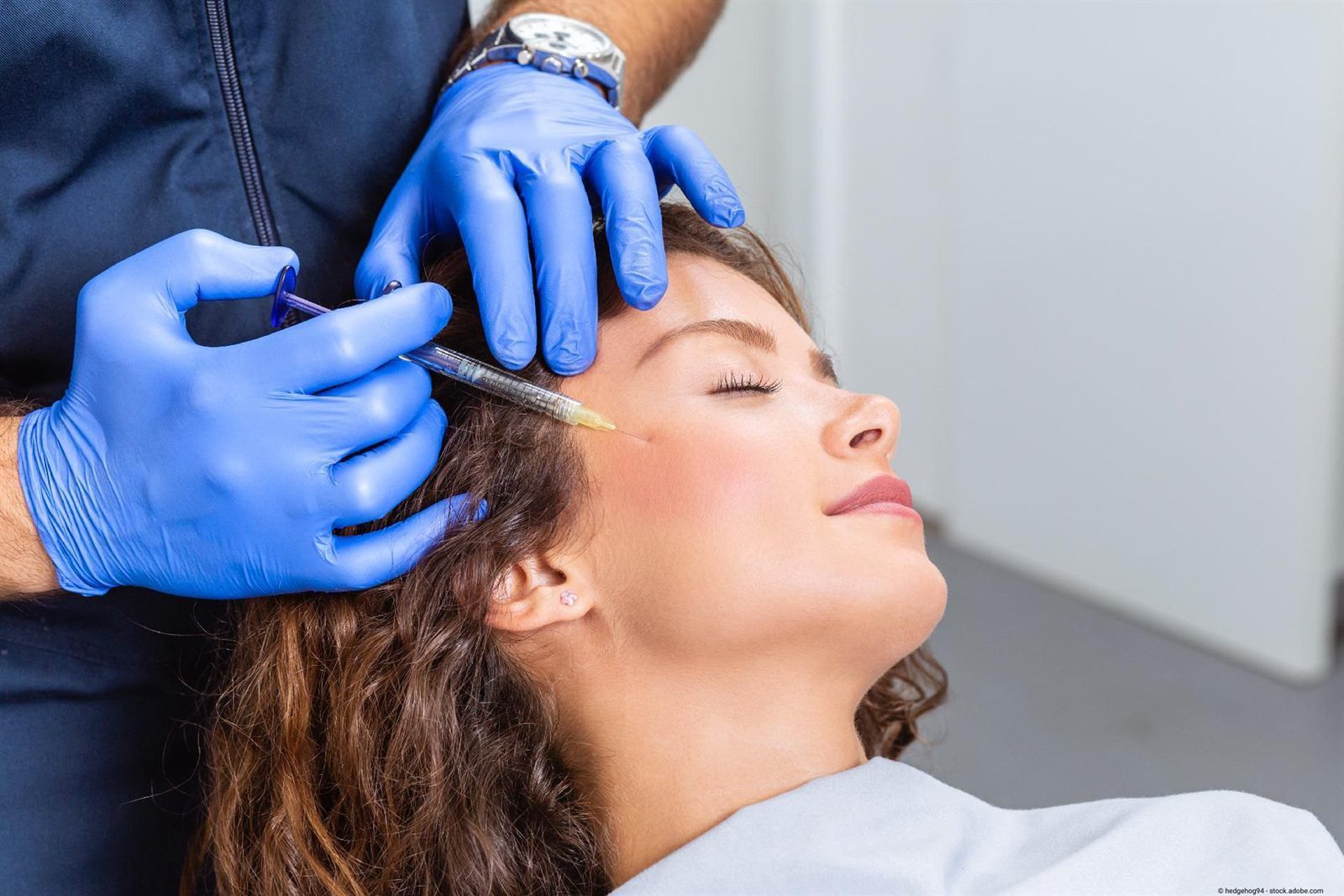
We use platelet-rich plasma from your own blood as a complement for thinning hair – after the causes have been investigated.
View service

Example image
We use platelet-rich plasma from your own blood for skin appearance and fine lines – with the body's own components.
View service
Example image
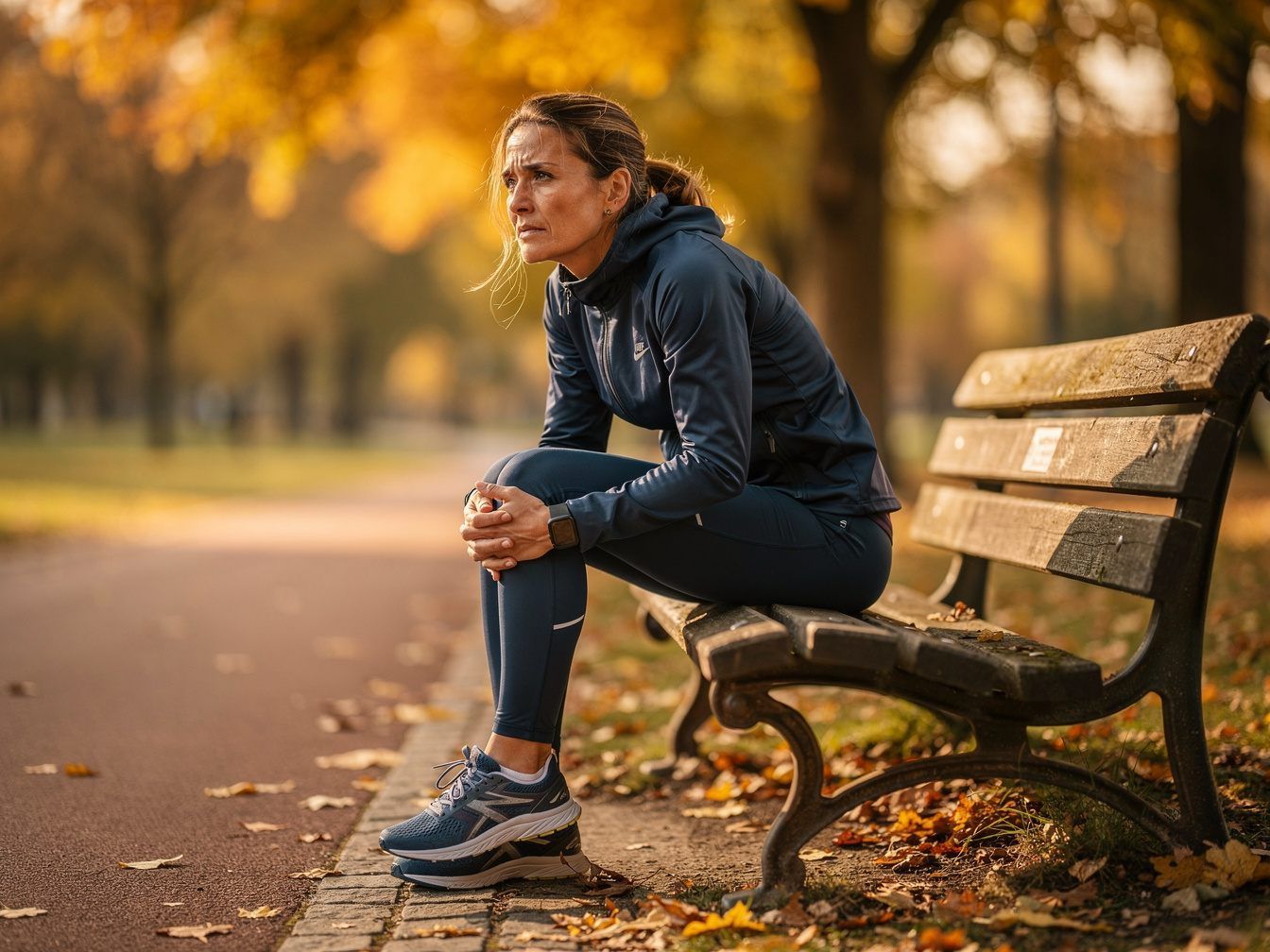
We use platelet-rich plasma as a complementary treatment for pain in joints, tendons and ligaments – after assessment by a specialist.
View service
Example image
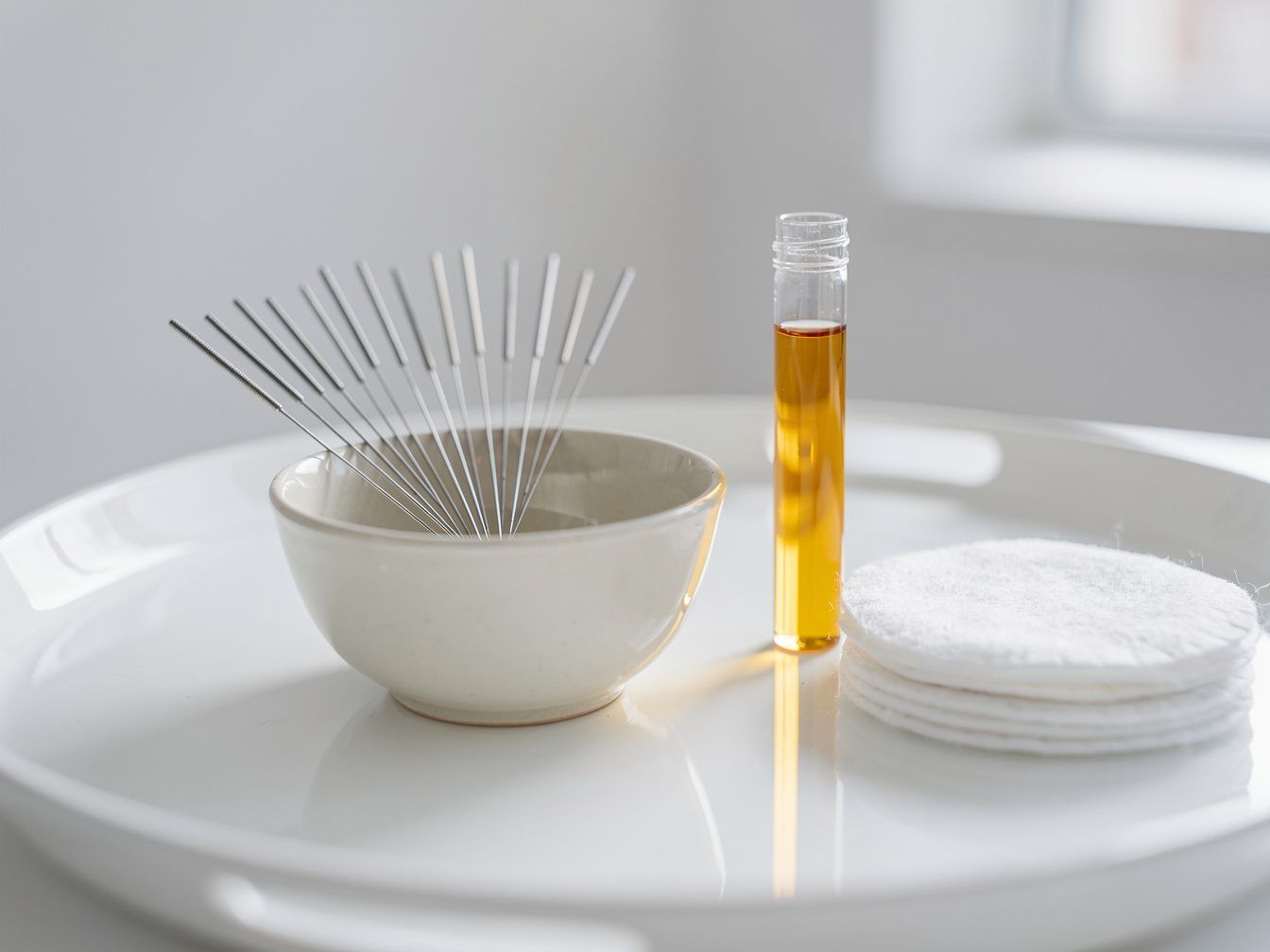
PLACU therapy combines platelet-rich plasma from your own blood with selected acupuncture points – a complementary method.
View service
Our approach
Our approach to PRP therapy
It begins with a detailed conversation about your history, your medication and your expectations. For hair loss or skin changes, we first investigate possible causes, such as hormones, the thyroid or nutrient deficiency. For joint complaints, the diagnosis belongs in orthopaedic hands. Only then do we discuss whether PRP sensibly complements your treatment. For the treatment, we take blood from an arm vein and separate it in the centrifuge. We then inject the platelet-rich plasma in a targeted way into the treatment area. Conventional diagnostics and a naturopathic way of thinking go together in our practice.
An honest assessment
For us, PRP is a complement, not a replacement for guideline-based treatment – its effectiveness has not been proven for every use, and we discuss this openly.
Your path through our practice
PRP therapy
1
Thorough assessment
- Detailed medical history
- Causes of hair loss
- Hormones and thyroid
- Orthopaedic findings
2
Careful preparation
- Blood draw from the arm vein
- Separation in the centrifuge
- Platelet-rich plasma
- Sterile technique
3
Targeted use
- Skin and face
- Scalp in cases of hair loss
- Joints, tendons, ligaments
- Acupuncture points (PLACU)
Simplified illustration – we put your treatment plan together individually.
From research
Publications related to this topic.
Over more than four decades, more than 400 scientific publications have been written – on gynaecology, oncology, environmental medicine, hormones, immunology and naturopathy. This knowledge informs every consultation with your gynaecologist in Munich.
2024
PLACU- Therapie in der Gynäkologie (Platelet Acupuncture Therapy), Zeitschrift für Angewandte Komplementärmedizin, 05/ 2024, S. 60-65
What our patients say
Personal, thorough, with time for you.
4.9
★★★★★
35 reviews on Google
★★★★★
“I have been a patient of Prof. Dr. Schulte-Uebbing for many years and have always been treated very kindly and attentively. The staff are very friendly and the doctor is very competent. Prof. Dr. Schulte-Uebbing always takes time to treat me competently …”
A
Andrea F. Google review 2020 · translated from German
★★★★★
“Prof. Dr. Schulte-Uebbing is a highly competent gynaecologist and environmental medicine specialist with many years of experience, whom I can absolutely recommend. I first came to this practice about 20 years ago because of environmental medicine aspects and since then have been …”
N
N. M. Google review 2019 · translated from German
★★★★★
“After moving to Munich, I was looking for a new gynaecologist and came across this practice. From the very first appointment I felt I was in very good hands. The whole practice team is exceptionally friendly. The medical assistants …”
N
N. T. Google review 2026 · translated from German
Expertise, clearly explained
Good to know
The background in detail – click to expand.
What is PRP?
PRP is short for “platelet-rich plasma”. Plasma is the liquid part of the blood. When an injury occurs, platelets, also called thrombocytes, make sure the wound closes. In doing so, they release growth factors and messenger substances involved in wound healing. In PRP treatment, this part of your own blood is concentrated and injected in a targeted way into a tissue. PRP is therefore a special form of autologous blood therapy. It is used in aesthetic medicine, for hair loss, in orthopaedics and in sports medicine, among other fields. In our practice, we use PRP for skin, hair and joints and combine it with acupuncture in PLACU therapy.
How PRP is obtained
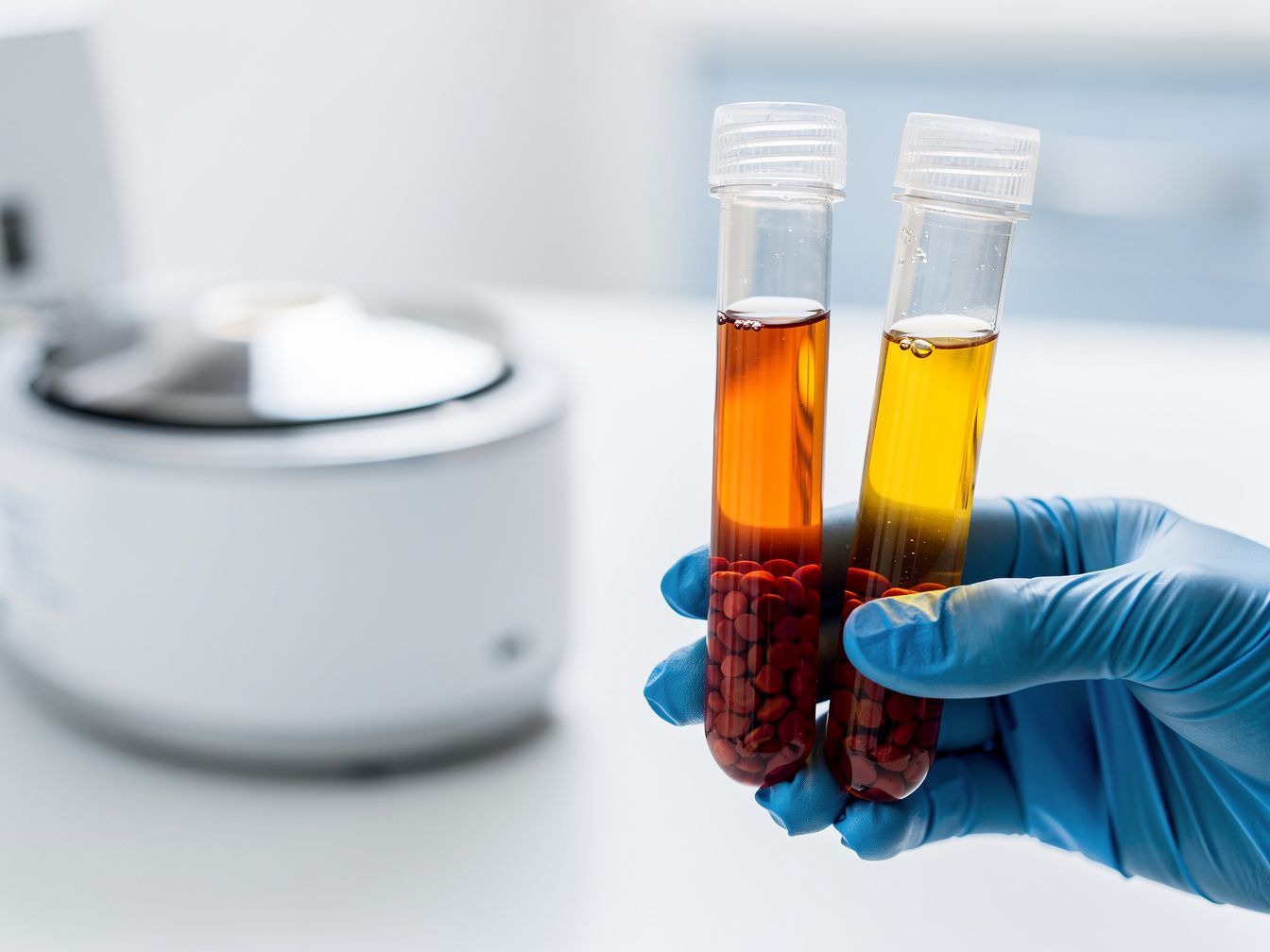
First, a small amount of blood is drawn from an arm vein into special tubes. The tubes contain an additive that prevents clotting. In a centrifuge, the blood spins at high speed and separates into layers: red blood cells at the bottom, with the plasma above. The part of the plasma rich in platelets is drawn off and prepared for injection. Depending on the treatment area, we inject the plasma with fine needles into the skin, the scalp, or a joint, tendon or ligament. As a rule, the blood draw, processing and injection take place in the same appointment. No filler materials, as used in wrinkle-filler injections, are introduced.
Context and state of the evidence
PRP has been used in various medical fields for many years. The evidence differs depending on the use and is inconsistent overall. One reason is that the processing methods differ, as do the platelet content of the finished plasma, the number of treatments and the intervals between them. We therefore see PRP as a complementary option, not as a replacement for treating a cause. How your body will respond cannot be predicted, and we do not promise any particular result. What you can rely on: honest advice, careful treatment and time for your questions.
Possible side effects
Because PRP comes from your own blood, intolerance of the material itself is rare. As with any injection, however, redness, swelling, a feeling of pressure or small bruises can occur at the injection site. They usually subside after a few days. Infections are rare; that is why we work under sterile conditions. PRP is not suitable, among other things, in blood clotting disorders and in a shortage of platelets. The same applies to acute infections, active cancer, and during pregnancy and breastfeeding. If you take blood-thinning medication, please tell us beforehand. Never stop medication on your own.
PLACU therapy and research
In 2024, Prof. Schulte-Uebbing published several specialist articles on PLACU therapy, “Platelet Acupuncture Therapy”. The name describes the combination of platelet-rich plasma and acupuncture points. Acupuncture has been a focus of our practice for decades. Prof. Schulte-Uebbing has been a member of the German Medical Association for Acupuncture (DÄGfA) for decades and has taught courses there as a lecturer. The articles appeared in the Journal of Applied Complementary Medicine (a German-language journal), among them “PLACU therapy in gynaecology (Platelet Acupuncture Therapy)”. As with all complementary methods: PLACU therapy complements guideline-based treatment and does not replace it. You can read more on our page about PLACU therapy.
Good questions. Clear answers.
Frequently asked questions about PRP therapy
Can't find your question? Give us a call – we will take the time.
Is PRP the same as autologous blood therapy?
PRP is a special form of autologous blood therapy (treatment using your own blood). In classic autologous blood therapy, blood is drawn and usually injected back without processing, for example into a muscle. With PRP, the blood is first processed in a centrifuge. Only the part of the plasma rich in platelets is injected – in a targeted way into the skin, scalp or joints.
Does health insurance cover the costs?
PRP treatments are generally self-pay services. Statutory health insurance (GKV) mostly does not cover them, and private health insurance often does not either, depending on the plan and reason for treatment. Billing is under the German Fee Schedule for Physicians (GOÄ). Examinations to establish causes may be covered by insurance depending on the findings. We will tell you before treatment what the costs will be.
Does the treatment hurt?
The blood draw is a brief prick. You feel the injections as fine needle pricks; some areas are more sensitive than others. Whether and how we numb the skin beforehand, for example with a cream or with cold, we discuss with you. After treatment, the area may feel tight or tender for a while.
How often is PRP given?
That depends on the treatment area and on your goal. PRP is often given as a series of several treatments a few weeks apart, later with top-up sessions where appropriate. We decide together how many appointments make sense for you. We discuss progress with you and adjust the plan.
How do I prepare?
Bring a list of your medication and any existing results. Some medications and supplements affect blood clotting. Please do not stop anything on your own, but talk to us beforehand. On the day of treatment, you should have eaten and drunk enough – this makes the blood draw easier.
Is PRP possible during pregnancy?
PRP treatments are generally not recommended during pregnancy and breastfeeding, because there are not enough data. You should postpone aesthetic treatments until afterwards. If you have hair loss after giving birth, we are happy to investigate the causes. Hair growth often returns to normal by itself after a few months.
Which PRP treatment is right for me?
We clarify this in a personal consultation. We offer PRP for thinning hair, for skin appearance, for complaints of joints, tendons and ligaments, and in PLACU therapy. Sometimes a different treatment makes more sense. We will tell you that openly too.
How do I book an appointment?
Call us on 089 299655 or book online via Doctolib. Our practice is at Residenzstraße 9 in Munich's old town, a few minutes' walk from Marienplatz and Odeonsplatz. A lift takes you to the fifth floor.
Where to read next
Other areas of care
13 services
6 services
5 services
11 services
6 services
5 services
We are happy to be there for you too
How can we help you?
Do you have unexplained symptoms and would like medical advice, or are you coming to us with an existing diagnosis? We warmly welcome you to our practice in the centre of Munich.
Book an appointment by phone
Book an appointment online
Write to us
Consultation hours
Mon, Tue, Thu 9:00–13:00 and 14:00–17:00 · Fri 9:00–13:00
Your appointment request
We need the details marked with * to be able to contact you.
Your appointment request
We will get back to you by phone or email. For a quicker response, use Doctolib or call 089 299655.