
Chelation therapy
If metal exposure has been confirmed, chelating agents given as an infusion bind metals – planned, supervised and monitored by a doctor.

Environmental medicine · Detoxification therapy
Assess first. Then ease the burden in a targeted way.
Do you suspect that pollutants or metals are affecting your health? We first look into it carefully. Only then do we discuss detoxification therapy: an individual plan combining avoiding sources, supporting the body's own excretion and, where metal exposure has been proven, targeted elimination. Prof. Schulte-Uebbing has worked in environmental medicine for over 30 years.

When to come to us
You have had contact with metals at work or in everyday life, for example through old water pipes or certain activities, and would like to have this checked.
Exhaustion, headaches or difficulty concentrating persist, and you wonder whether environmental factors play a part.
Perfume, cleaning products or new furniture trigger symptoms in you, and you are looking for connections.
A test result shows raised metals or pollutants, and you would like to know what it means and what makes sense now.
Our approach
For us, “detoxification” is not a single procedure but a concept. It starts with a detailed history and targeted laboratory tests. These show whether there is any exposure at all and where it might come from. The first and most important step is usually to identify and reduce sources of exposure. Naturopathic detoxification therapy is also based on an idea: the body can be supported in breaking down and excreting pollutants – via the liver, kidneys and gut. Where metal exposure has been proven, chelation therapy may be added. The aim is to reduce toxic burdens and ease the load on the immune, hormonal and metabolic systems.
We see naturopathic detoxification therapies as a complement to guideline-based diagnostics and treatment, not a substitute; their effectiveness is not generally proven scientifically, and we discuss openly what makes sense in your situation.
Careful and personal
We ask about symptoms, history, home, work, diet, dental materials and care products in order to identify possible sources of exposure.
Depending on the question, we measure metals, micronutrients or other values, including via a private laboratory. We explain what a result shows and what it does not.
Together we consider which exposures can be avoided in everyday life. This is often the first and most important step.
Support with micronutrients, amino acids or infusions may also be considered as a complement. It is based on the idea of supporting the body's own detoxification pathways.
Where metal exposure has been proven, heavy metal elimination with chelating agents may make sense – active substances that bind metals. More on this on the Chelation therapy page.
At intervals we check how you are doing and how your values are developing, and adjust the plan.
From research
Over more than four decades, more than 400 scientific publications have been written – on gynaecology, oncology, environmental medicine, hormones, immunology and naturopathy. This knowledge informs every consultation with your gynaecologist in Munich.
Stellenwert toxischer Metalle in der Umweltmedizin, Workshop für Ärzt(Inn)e(n), Med Woche Baden Baden, 1.11.2019
Endokrine Disruptoren im Trinkwasser. Fördern Kunststoff- Partikel, Weichmacher, Pestizide und Schwermetalle im Trinkwasser hormonabhängige Tumoren ?, Z. Prävention und Rehabilitation, 2017, 29/1 (1. Quartal 2017), S. 1-13
Einfluss toxischer Metalle auf die Krebsentstehung, Deutsche Zeitschrift für Onkologie, 2016; 48(01): 14-24
Toxikologische Aspekte in der Angewandten Onkologie unter besonderer Berücksichtigung der Schwermetalle, DZO (Deutsche Zeitschrift f. Onkologie) 8-2016
Is this right for me?
If you suspect acute poisoning, call the emergency number 112 or contact the poison helpline straight away. Elimination procedures are generally not an option during pregnancy and breastfeeding. With kidney disease or serious pre-existing conditions, we weigh things up with particular care or recommend a different route.
In four steps
By phone on 089 299655 or online via Doctolib. Please bring any results and laboratory values you have.
We take time for your history and possible sources of exposure and arrange targeted laboratory tests.
We go through the results in plain terms and develop an individual plan with you, including the costs.
You put first steps into practice in your daily life, and complementary treatments take place at the practice. Check-ups show whether we should adjust the plan.
Transparent from the start
Patients with statutory health insurance (GKV) and private health insurance are welcome here. However, environmental medicine laboratory tests and detoxification therapies are usually self-pay services under the German medical fee schedule (GOÄ). Whether your private health insurance or Beihilfe (the state healthcare allowance for civil servants) covers the costs depends on your tariff. We will tell you before treatment what costs to expect, and we agree each step with you.
What our patients say
“After moving to Munich, I was looking for a new gynaecologist and came across this practice. From the very first appointment I felt I was in very good hands. The whole practice team is exceptionally friendly. The medical assistants …”
“A very pleasant practice with friendly staff and a competent doctor. Getting an appointment was straightforward, the waiting time was short and I felt at ease from the start. Many thanks for the wonderful care!”
“Competent doctor!”
Expertise, clearly explained
The background in detail – click to expand.
The body has its own ways of breaking down and excreting substances – mainly through the liver, kidneys, gut, skin and lungs. In conventional medicine, “detoxification” usually means treating acute poisoning. In naturopathy the term is broader: it refers to measures intended to support the body's own detoxification. We also speak of detoxification capacity. This means how well the body can cope with exposures. It varies from person to person and depends on factors such as genes, diet, age and pre-existing conditions. For many over-the-counter “detox” products and programmes there is no scientific evidence. That is why we rely on assessment rather than one-size-fits-all programmes.
Heavy metals such as lead, mercury or cadmium can accumulate in the body. Sources include old lead pipes, certain predatory fish, tobacco smoke or handling metals at work. Heavy metal elimination only makes sense if relevant exposure has been proven. Chelating agents are used for this – active substances that bind metals so that they can be excreted through the kidneys. The procedure belongs in medical hands, because it also binds trace elements the body needs and requires monitoring. Prof. Schulte-Uebbing has worked in metal toxicology for many years, for example in the workshop “Metal Elimination in Oncology Practice” (Medical Society for Clinical Metal Toxicology, 2011).
Some pollutants interfere with the hormone system. They are called endocrine disruptors. They include certain plasticisers, fragrance additives, pesticides and metals. This topic is especially important for women, because many gynaecological conditions are hormone-dependent. Prof. Schulte-Uebbing has addressed it in talks and articles, for example “Endocrine Disruptors, Detoxification Concepts” (workshop for doctors, Munich, 2011) and “Endocrine Effects of Heavy Metals” (Heavy Metal Workshop, German Medical Society for Clinical Metal Toxicology, 2010). Many connections have not yet been conclusively clarified. For everyday life this means: reduce exposures consciously, without becoming anxious.
To break down pollutants, the body needs building blocks such as amino acids, vitamins and trace elements. A deficiency can be identified in the laboratory. Prof. Schulte-Uebbing has published on this: “Pollutants as a Cause or Trigger of Endocrine Disorders and Chronic Diseases. Amino Acids in the Prevention or Treatment of Diseases (Partly) Triggered by Pollutants” (Journal of Orthomolecular Medicine, 2018). Whether a supplement as a capsule or infusion makes sense for you is something we decide on the basis of your values. More is not automatically better: micronutrients can also be overdosed.
Many exposures can be reduced in everyday life. Ventilate regularly, choose perfume-free care and cleaning products, and do not heat food in plastic. Give up smoking and eat a varied diet. Drinking enough, exercise and sleep support the normal functions of the liver, kidneys and gut. In older buildings with old water pipes, testing the drinking water may make sense. Prof. Schulte-Uebbing has also looked at drinking water, for example in the article “Is Our Drinking Water Making Us Ill?” (Your Health magazine, 2017). These steps are simple and form the basis of any detoxification therapy.
Good questions. Clear answers.
Can't find your question? Give us a call – we will take the time.
Not every patient needs detoxification therapy. The liver, kidneys and gut do a great deal every day. Whether you have an exposure that makes treatment worthwhile is something we first establish through conversation and laboratory tests. Only then do we decide together whether and how to proceed.
The basis is a detailed medical history and targeted laboratory tests, for example of blood or urine. Which values make sense depends on your history. Not every test is equally informative. We explain openly what a result means and where its limits lie.
Detoxification therapy is the overall concept: reduce sources, support the body's own excretion, correct deficiencies. Chelation therapy is a single, targeted building block where metal exposure has been proven. Chelating agents bind metals so that the body can excrete them through the kidneys.
That varies greatly and depends on the type and extent of exposure, your symptoms and your results. Sometimes changes in everyday life are enough; sometimes longer support makes sense. We plan step by step and review progress regularly.
That depends on the building block. Changes in everyday habits are usually unproblematic. Infusions and chelating agents can have side effects, for example circulatory reactions or a loss of important trace elements. That is why we clarify pre-existing conditions beforehand and monitor progress.
Elimination procedures are generally not an option during pregnancy and breastfeeding, because metals can be released from tissue. In that case, advice and avoiding sources of exposure are what make sense. If you are planning a pregnancy, please do speak to us early.
For most over-the-counter detox products there is no scientific evidence of a detoxifying effect. Some are harmless, others expensive or burdensome. If you suspect an exposure, medical assessment is the more reliable route.
Environmental medicine laboratory tests and detoxification therapies are usually self-pay services under the German medical fee schedule (GOÄ). Whether your private health insurance or Beihilfe (the state healthcare allowance for civil servants) covers the costs depends on your tariff. We will tell you before treatment what costs to expect.
Where to read next
If metal exposure has been confirmed, chelating agents given as an infusion bind metals – planned, supervised and monitored by a doctor.
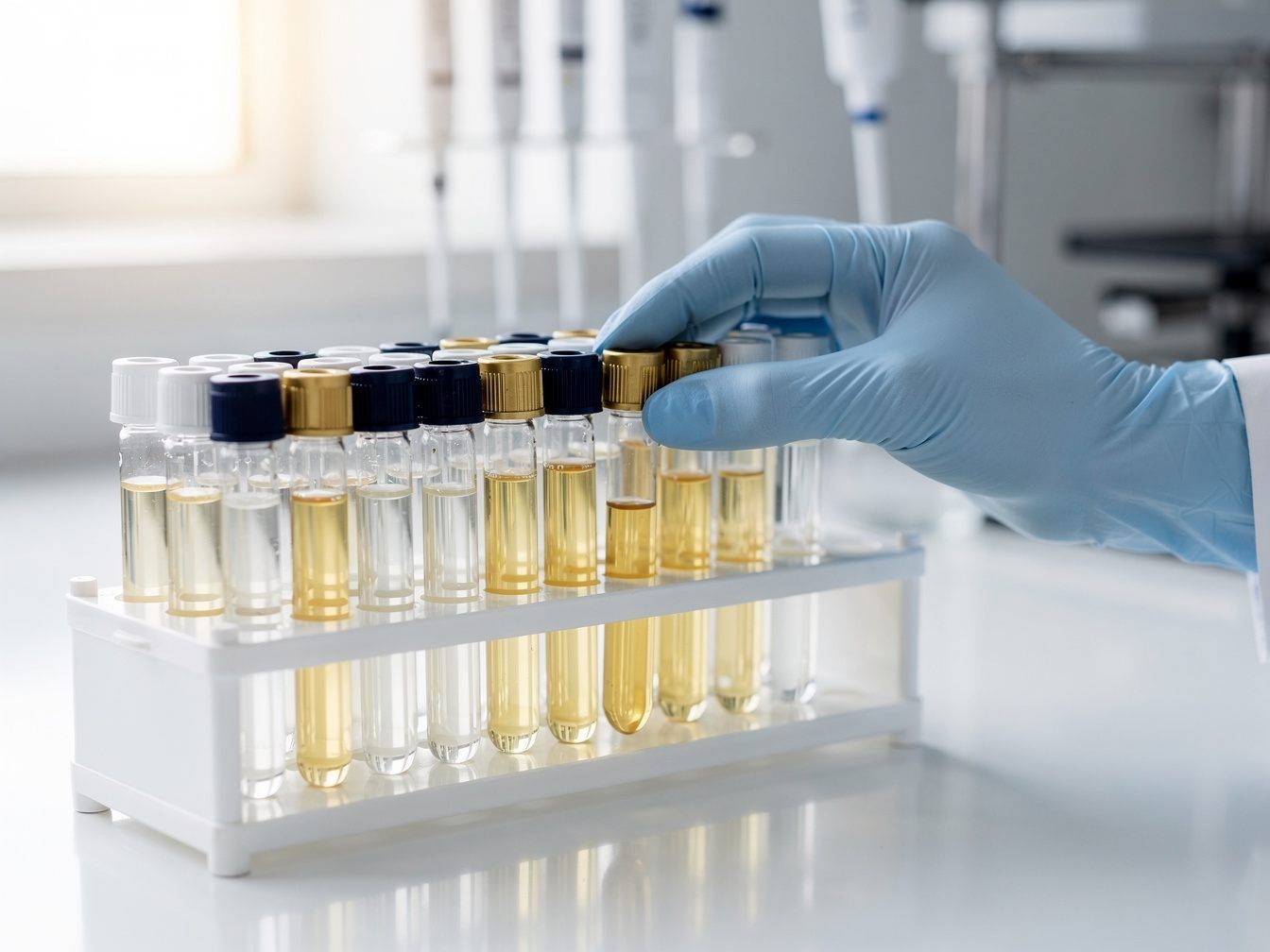 Example image
Laboratory tests and hormone analysis show what may be behind symptoms – as the basis for targeted, individual treatment.
 Example image
With weakened defences and frequent infections, we support you holistically – with immune infusions, acupuncture and laser therapy.
We are happy to be there for you too
Do you have unexplained symptoms and would like medical advice, or are you coming to us with an existing diagnosis? We warmly welcome you to our practice in the centre of Munich.