Hormonal disorders
We look for the cause of your hormonal disorder – with a thorough hormone analysis and a treatment that suits you.

Gynaecology · PCOS
Understand the connections. Treat in a targeted way.
Irregular periods, blemished skin, increased hair growth or an unfulfilled wish for a child can be caused by polycystic ovary syndrome (PCOS). At our practice in Munich, we investigate the connections between hormones, metabolism and thyroid thoroughly. Together with you, we develop a treatment that fits your life.

When to come to us
Your periods come infrequently, very irregularly or stop altogether. Ovulation is then often absent too.
Acne, oily skin, increased hair growth on the chin, chest or abdomen or thinning hair on the head can point to too many male hormones.
You put on weight easily, especially around the abdomen, and find it hard to lose weight. Insulin resistance can be behind this.
Without regular ovulation, getting pregnant is often not so easy. We investigate whether PCOS is behind it.
Our approach
PCOS is more than a cycle issue. It affects hormones, metabolism, skin and often emotional wellbeing too. That is why, in the first consultation, we take time for your symptoms, your goals and your circumstances. A hormone analysis, metabolic values and an ultrasound of the ovaries confirm the diagnosis. We rule out other causes such as thyroid disease. Treatment is guided by what matters to you: a regular cycle, fewer skin problems, a healthy metabolism or a child. Guideline-based therapy, lifestyle and complementary naturopathic methods work together here.
Naturopathic methods and micronutrients can accompany treatment for PCOS, but do not replace guideline-based therapy – their effectiveness is not proven for every application, so we openly discuss what suits you.
Careful and personal
We ask about your cycle, skin, hair, weight, wish for a child and illnesses in the family, such as diabetes.
Among other things, we measure male hormones, cycle hormones, thyroid values and prolactin. This is how we distinguish PCOS from other causes.
A vaginal ultrasound shows whether the ovaries contain many small follicles – the typical picture that gives the syndrome its name.
Blood sugar, insulin and blood fats show whether insulin resistance is present. It is common in PCOS and can be treated in a targeted way.
Depending on your goal, we regulate the cycle, treat skin and hair problems and insulin resistance, or support ovulation if you wish to have a child.
Diet, exercise, herbal remedies, micronutrients and acupuncture can complement treatment. We discuss what fits into your everyday life.
From research
Over more than four decades, more than 400 scientific publications have been written – on gynaecology, oncology, environmental medicine, hormones, immunology and naturopathy. This knowledge informs every consultation with your gynaecologist in Munich.
Integration der Traditionellen Westlichen Medizin (TWM) in die moderne Frauenheilkunde (Teil 2): Beispiele Zyklus-Störungen, Hypomenorrhöe, Amenorrhöe, Zeitschrift für Angewandte Komplementärmedizin, 08/ 2023, S. 50 ff.
Prävention des Mammakarzinoms – endokrinologische und toxikologische Aspekte. Die Rolle von Östrogendominanz, Schilddrüsenunterfunktion, Morbus Hashimoto, NNR-Schwäche, Progesteron- und Insulinresistenz – mögliche Effekte endokriner Disruptoren, Prävention und Rehabilitation, Jahrgang 27, Nr. 1/ 2015, S. 26–37
M. Hashimoto – Zunehmende Tendenz durch Umweltgifte ? Fördern Endokrine Disruptoren über Estrogen-Dominanz, Progesteron-Resistenz und Insulin-Resistenz M. Hashimoto und hormonabhängige Tumoren ? Zeitschrift Umwelt Medizin Gesellschaft 26, 4, 2013, S. 288-293
SCHULTE-UEBBING, C., CRAIUT, D., KLEINE-GUNK, B., OLAH, H., CRAIUT, L. Morbus Hashimoto – an important cofactor for PDS (Progesterone Deficiency Syndrome), EDS (Estrogen Dominance Syndrome) and IRS (Insuline Resistence Syndrome) ? Congresul de Ginecologie Endocrinologica (International Congress for Gynecol. Endocrinology), Sinaia, 6.-8. Iunie, 2013
Is this right for me?
If your period does not come, pregnancy can also be the cause – a test will give clarity. For severe lower abdominal pain, fever or heavy bleeding, contact the on-call medical service on 116 117 or, in an emergency, call 112. If you have been hoping for a child for some time, a fertility centre can additionally make sense.
In four steps
Call us on 089 299655 or book online via Doctolib. If possible, please bring any cycle records and existing medical reports.
We talk about your symptoms and goals. An examination, ultrasound and a blood sample for hormone and metabolic values follow.
We discuss the results in detail. Together we decide what takes priority – cycle, skin, metabolism or wanting a child.
PCOS stays with many women for years. We carry out regular check-ups, adjust treatment to your stage of life and remain your point of contact.
Transparent from the start
Statutory health insurance (GKV) covers diagnostics and guideline-based treatment of PCOS. For patients with private health insurance, reimbursement depends on their policy. Extended laboratory analyses without an insurance indication, micronutrients and naturopathic methods are usually self-pay services under the German medical fee schedule (GOÄ) for patients with statutory health insurance. We will tell you before examination and treatment what the costs will be.
What our patients say
“Wonderful doctor. I went there with my wife to accompany her because she was so terribly afraid. She says so herself too. He is very empathetic and gives you a great feeling of being in very, very good hands there. The team is lovely and …”
“Very friendly and competent team. I have been a patient for years and am very satisfied, especially with the immune infusions, particularly after past illnesses/operations.”
“I have been a patient of Prof. Dr. Schulte-Uebbing for many years and have always been treated very kindly and attentively. The staff are very friendly and the doctor is very competent. Prof. Dr. Schulte-Uebbing always takes time to treat me competently …”
Expertise, clearly explained
The background in detail – click to expand.
Polycystic ovary syndrome, or PCOS for short, is a common hormonal disorder in women of childbearing age. Its hallmarks are irregular or absent ovulation, an excess of male hormones (androgens) and ovaries with many small follicles. The name is somewhat misleading: these are not true cysts but follicles that do not mature. The diagnosis is made when two of these three features are present and other causes have been ruled out. These include, for example, thyroid disease or raised prolactin. The exact causes are not fully understood. Hereditary factors, insulin resistance and being overweight play a role. PCOS looks different in every woman.
Many women with PCOS have insulin resistance: the body's cells respond less well to insulin, and the pancreas produces more of it. A high insulin level stimulates the ovaries to produce more male hormones. This creates a cycle that affects the menstrual cycle, skin and weight. In the long term, PCOS can increase the risk of type 2 diabetes and cardiovascular disease. That is no reason to worry, but it is a good reason to check blood sugar, blood fats and blood pressure regularly. Exercise and a balanced diet can improve the effect of insulin – even without major weight loss. In his publications, Prof. Dr. Schulte-Uebbing addresses the interplay of hormones, thyroid and insulin resistance.
Treatment depends on your main concern. If you do not wish to have a child, hormonal treatment can make the cycle regular and dampen the effect of male hormones on skin and hair. For insulin resistance, medications that improve the effect of insulin are an option. If you wish to have a child, the aim is to promote ovulation – first through lifestyle, then with medication that triggers ovulation. If that is not enough, treatment at a fertility centre may make sense. For increased hair growth, permanent hair removal is also an option, which we likewise offer at our practice. Herbal remedies, micronutrients and acupuncture can accompany treatment as a complement. Their effectiveness is not proven for every application.
In PCOS, lifestyle is not a side issue but a building block of treatment. Regular exercise, both endurance and strength, improves the effect of insulin. A balanced diet with plenty of vegetables, fibre and protein and little sugar and white flour helps to keep blood sugar stable. If you are overweight, even moderate weight loss can have a positive effect on the cycle. Sleep and stress management also play a role. Strict diets, by contrast, rarely help. What matters is what you can keep up in the long term. We discuss realistic steps with you. PCOS can also weigh on your self-image. Please feel free to raise this with us.
If you wish to have a child, it is worth looking beyond the ovaries. The thyroid also influences ovulation and fertility, and Hashimoto's thyroiditis is not uncommon in women. Prof. Dr. Schulte-Uebbing has worked on these connections for many years. His publications include “Unfulfilled wish for a child and Hashimoto's disease. The thyroid disease is an often underestimated (partial) cause” (CO’MED, 2013; published in German). That is why, with PCOS and a wish for a child, we also check the thyroid and other hormones. We discuss openly with you whether treatment at our practice is enough or whether a fertility centre should be added. You can read more on our fertility page.
Good questions. Clear answers.
Can't find your question? Give us a call – we will take the time.
The diagnosis rests on three features: cycle disturbances without regular ovulation, signs of too many male hormones in the blood or on the skin and hair, and typically altered ovaries on ultrasound. If two of these are present and other causes have been ruled out, it is called PCOS. For this we need a consultation, an examination, ultrasound and laboratory values.
Usually not in the strict sense. The “cysts” in PCOS are many small follicles that do not mature and do not release an egg. They are benign and generally do not need to be removed. True cysts are something different. You can read more on our cysts page.
Yes, many women with PCOS become pregnant – some naturally, others with support. Often a first step is to improve metabolism and regulate the cycle. If that is not enough, ovulation can be supported with medication. We support you through this and also take the thyroid into account.
PCOS is a lasting predisposition that does not simply go away. However, the symptoms can be treated, and they change over the course of life. The aim is to bring cycle, skin and metabolism into good balance and to keep long-term risks in view.
Not necessarily. In PCOS, the pill can make the cycle regular and improve skin and hair if you do not wish to have a child. There are also other options, depending on your goals. We discuss the advantages and disadvantages of all the options with you and decide together.
If you are overweight, even moderate weight loss can improve the cycle and the effect of insulin. But slim women can have PCOS too. Regular exercise and a balanced diet are what matter – regardless of weight. We support you with realistic steps rather than strict diets.
The causes of PCOS are not fully understood. Among other things, it is being discussed whether hormonally active substances from the environment, so-called endocrine disruptors, influence the hormone balance. Prof. Dr. Schulte-Uebbing has worked on such substances for many years. If it makes sense for you, we include possible exposures in the assessment.
Statutory health insurance (GKV) covers diagnostics and guideline-based treatment. Extended laboratory tests, micronutrients and naturopathic methods are usually self-pay services under the German medical fee schedule (GOÄ). Private insurers reimburse depending on the policy. We will tell you in advance what the costs will be.
Where to read next
We look for the cause of your hormonal disorder – with a thorough hormone analysis and a treatment that suits you.

We support you holistically when you are trying to conceive and look at the thyroid, hormones, lifestyle and acupuncture in context.
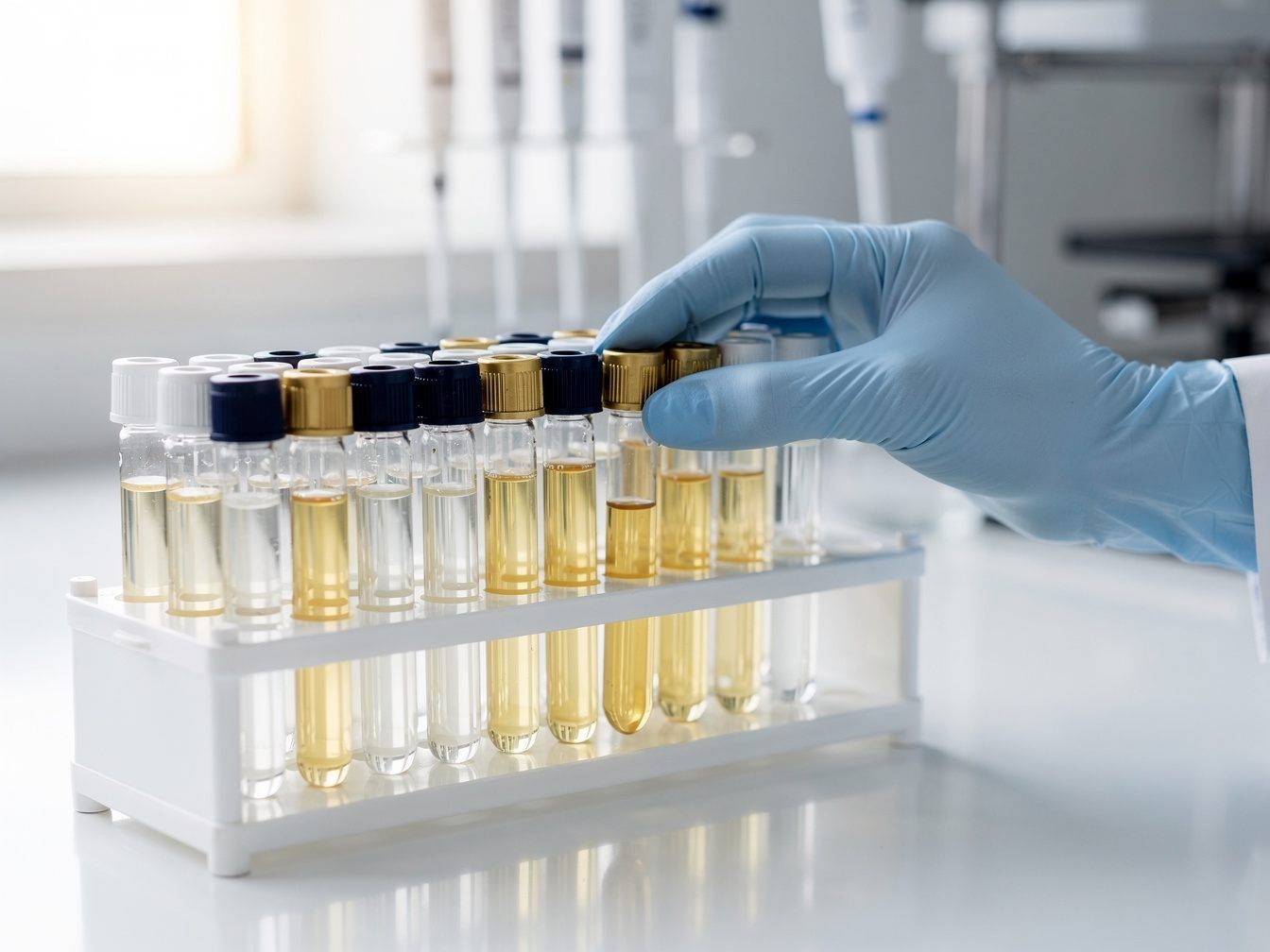 Example image
Laboratory tests and hormone analysis show what may be behind symptoms – as the basis for targeted, individual treatment.
We are happy to be there for you too
Do you have unexplained symptoms and would like medical advice, or are you coming to us with an existing diagnosis? We warmly welcome you to our practice in the centre of Munich.